
Every report captured. You run the case.

Ethena's Ethics Hotline & Case Management gives your people a safe way to speak up, on any device, in any language. Every report lands in one case file, routed and tracked from intake to resolution. The Disclosure Agent organizes the record and surfaces what needs your attention. You decide how every case moves.

Let's talk
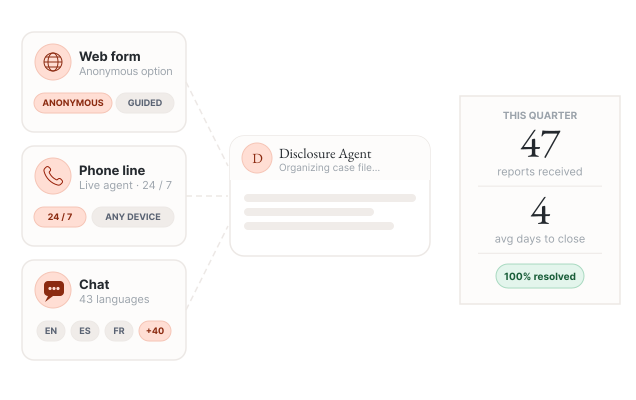

Make speaking up easy

Employees report through web, phone, or chat, anonymously when they choose, in their own language. Intake asks the right follow-up questions up front, so the first report is a complete report. No vague tips that go nowhere. No email chains to reconstruct what happened.

Case management that works for you

Each report opens a case with a clear owner, status, and timeline. Routing, tasks, and notes stay in one place, so nothing slips between an inbox and a spreadsheet. You track every case from intake to resolution, with the full record ready the moment Legal or the board asks.

Case Management tracks every report to flag spikes, repeat names, and hotspots across your company. You see the signal early, like three retaliation reports in one org, before it becomes a bigger problem. You walk into the audit committee with the data already organized.

A hotline report doesn't sit in a silo. It connects to the rest of your compliance program. A harassment report can trigger the Training Agent to assign a targeted refresher, or the Policy Agent to draft a fix where guidance fell short. You get one summary of the drafts. The agents draft. You decide.

Ethics Hotlines: Frequently Asked Questions (FAQs)

What is an ethics hotline?

An ethics hotline is a secure, confidential way for employees to report concerns about things like harassment, discrimination, fraud, safety violations, or other misconduct. It's so much more than a phone line — today’s hotlines often include web portals, mobile apps, and even QR codes for easy access. The goal is to create a speak-up culture where people feel safe raising issues without fear of retaliation.

How do ethics hotlines work?

Employees can submit a report through the ethics hotline using whichever method is most convenient — phone, web, mobile — and provide details about their concern. From there, the report typically gets routed to the appropriate internal team (like HR, Legal, or Compliance), who can review it, follow up, and document the outcome. Some ethics hotlines also support two-way anonymous messaging, so investigators can ask questions or provide updates while protecting the reporter’s identity.

Are companies required by law to have an ethics hotline?

In the United States, publicly traded companies are required under the Sarbanes-Oxley Act to provide a confidential and anonymous way for employees to report concerns about accounting or auditing irregularities.

Many global regulations (like the EU Whistleblower Directive) also mandate hotlines for certain organizations. Even in cases where it’s not legally required, having an ethics hotline is widely considered a best practice — it helps organizations detect issues early, shows commitment to compliance, and builds a more transparent, accountable culture.

Are ethics hotlines really anonymous?

They can be! If anonymity is enabled, employees can file reports without sharing their name or contact info. Most modern systems are built with privacy in mind and offer secure, encrypted ways to communicate throughout the investigation. That means even if someone stays anonymous, they can still respond to follow-up questions and check the status of their report, all without revealing who they are.

Give people a safe way to speak up

See how Ethena's Ethics Hotline & Case Management captures every report and connects it to the Disclosure Agent and the rest of your compliance program. Let's talk.

Ethena platform course customization demo