
 Code of Conduct
 Ethical Mgmt
 Speak-up Culture
 Latin America
 Asia Pacific
 FX Global Code
 Financial Services
 North America
 Europe
 Middle East
 MSBs
MSBs FinTech
 Insurance
 Investing
 Casinos
 Retail Banks
 Manufacturing
 U.S. National
 Canada
 California
 New York
 Illinois
 Connecticut
 Maine
Maine Delaware
 Retail
 Warehouse
 Healthcare
 Animated
 Billing & Revenue
 IT & Admins
 Leadership
 Ontario
 British Columbia
 UK Induction
 Australia & NZ
 Workplace Violence Prevention
 Canada
 Italy
Italy Active Shooter
 AI & Workplace
 Corporate Ethics
 Whistleblower
 Gvmt Contracting
 Export Controls
Common Reporting Standard (CRS) Training

- AI authoring tools for easy customization
- Additional languages available
- Meets accessibility standards
- Auto-save training, mobile-friendly
- Deliver on Ethena or your LMS (SCORM)

Course Summary
The Common Reporting Standard helps tax authorities share financial account information and stop offshore tax evasion. This Ethena course shows your teams how to classify accounts, run due diligence, and report accurately.
- What CRS is and why it exists
- Classifying accounts and account holders
- Due diligence and change-in-circumstance rules
- Reporting accurately and speaking up
Included Modules:
What Is the Common Reporting Standard?
Introduces the Common Reporting Standard, the global framework for automatic exchange of financial account information to help tax authorities curb offshore tax evasion.
How OECD Shapes CRS Compliance
Explains how the OECD created and maintains CRS, issuing the model rules, commentary, and guidance that countries adopt into local law and enforce.
Understanding Account Classification
Covers how to classify account holders and entities under CRS, distinguishing reportable persons, financial institutions, and active or passive non-financial entities.
CRS Due Diligence Requirements
Walks through CRS due diligence rules for identifying reportable accounts, including self-certifications and the indicia searches used for individuals and entities.
Handling Changes That Affect CRS
Explains how to spot and respond to changes in circumstances, such as new addresses or ownership, that may alter an account’s CRS reporting status.
CRS Reporting Requirements
Outlines what information must be reported, to which authority, and on what timeline, so financial account data reaches tax administrations accurately and on time.
Speak Up Culture
Encourages employees to raise concerns about possible CRS breaches or evasion early, explaining reporting channels and the protection against retaliation for speaking up.









Learning and compliance with AI at the core
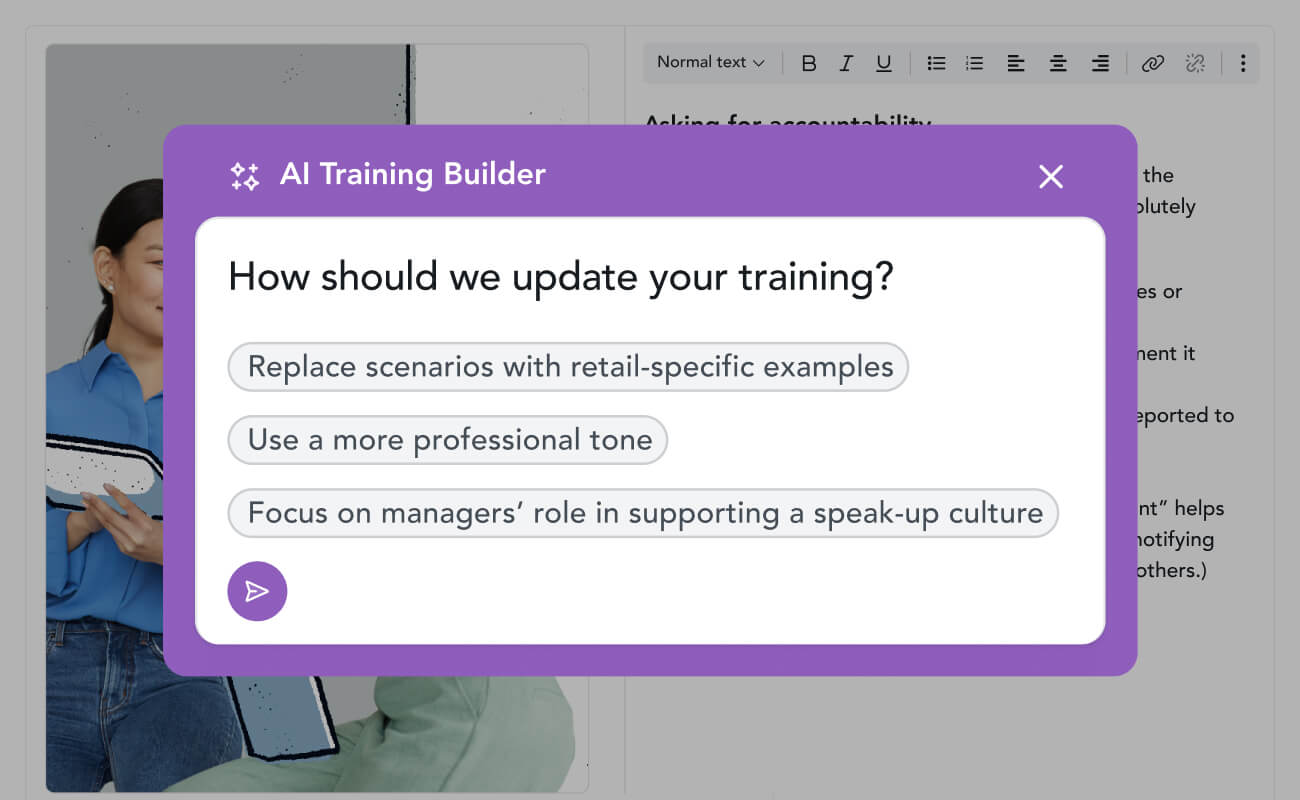
Your training copilot
Built-in AI uses your policies and prompts to customize Ethena’s top-rated content painlessly, while controls keep you compliant.
AI authoring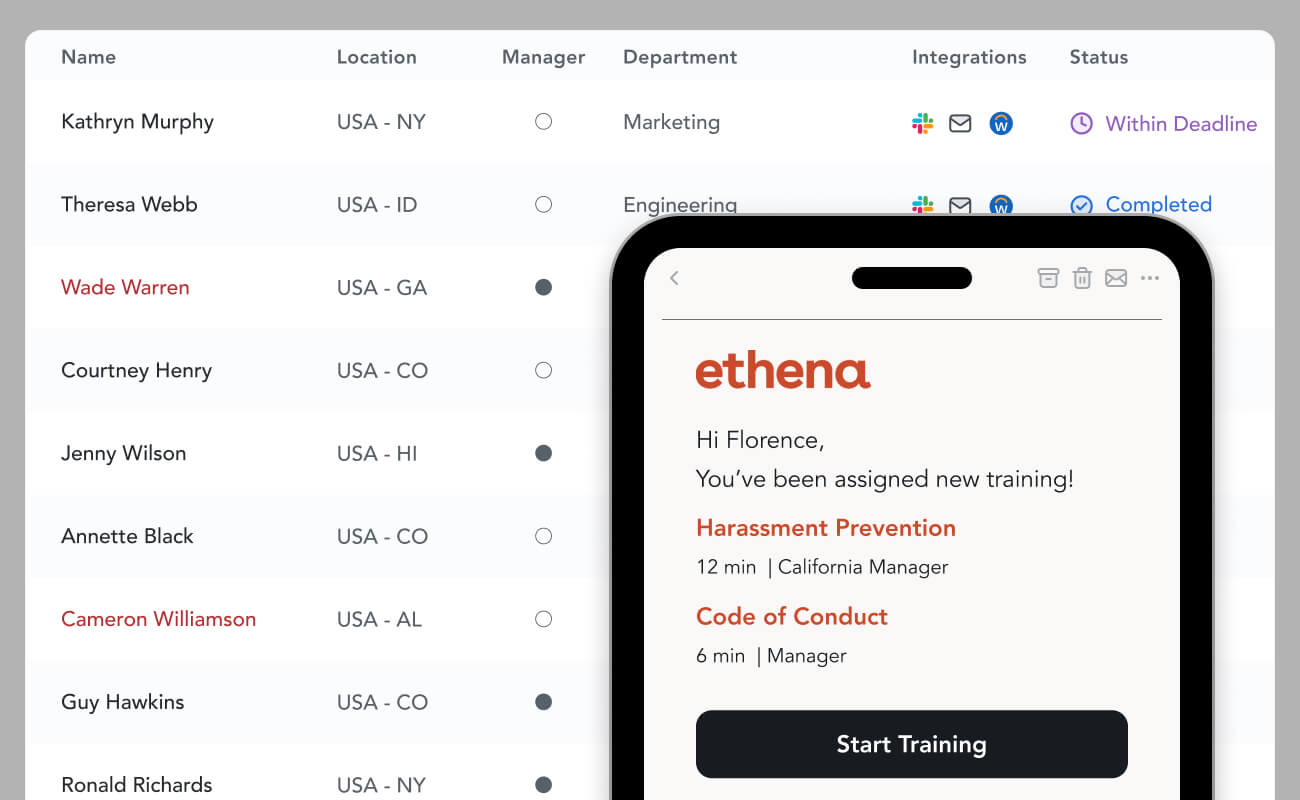
Assignments automated
Sync HRIS data to automatically deliver the right training to the right learners with automatic reminders. No more spreadsheets.
Assignment automation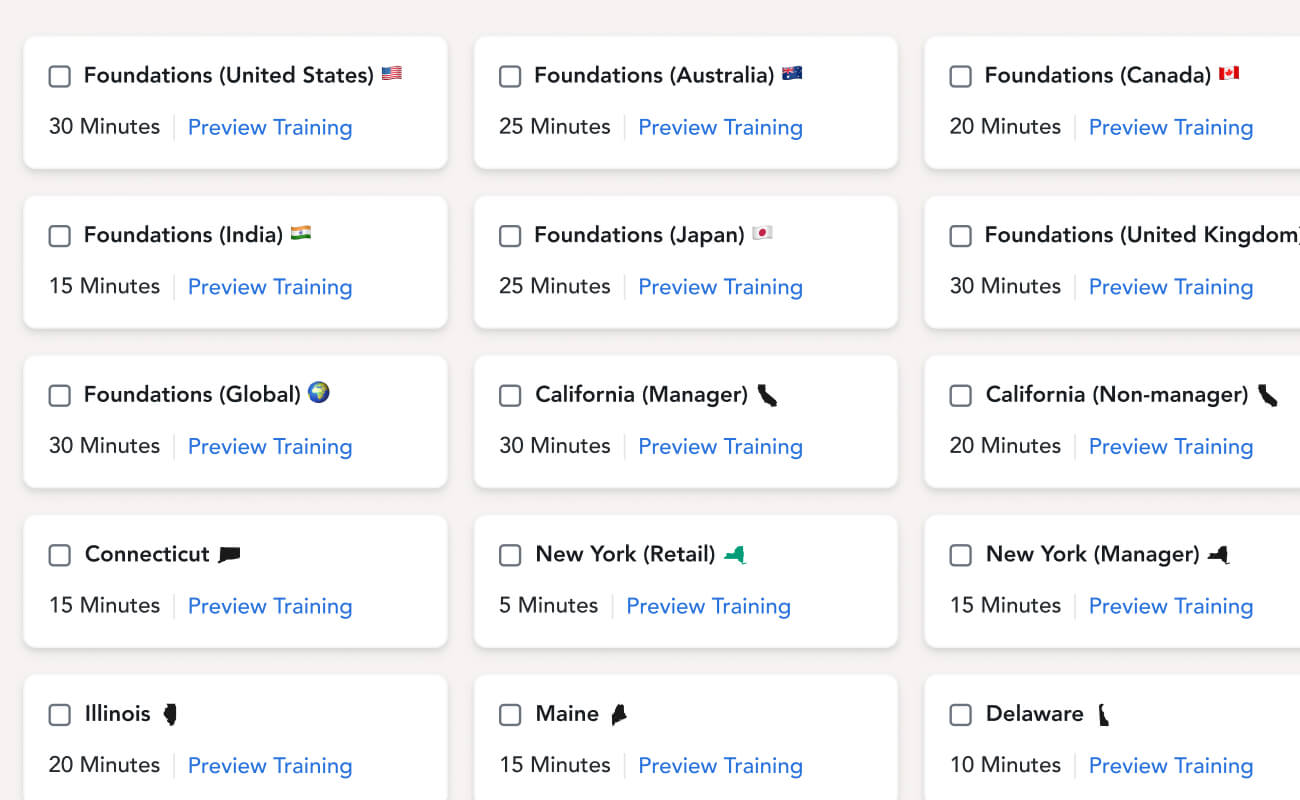
Localized content
200+ modular courses meet local, state, and country legal requirements, with fast and free translations available in dozens of languages.
See courses