
 Code of Conduct
 Ethical Mgmt
 Speak-up Culture
 Latin America
 Asia Pacific
 FX Global Code
 Financial Services
 North America
 Europe
 Middle East
 MSBs
MSBs FinTech
 Insurance
 Investing
 Casinos
 Retail Banks
 Manufacturing
 U.S. National
 Canada
 California
 New York
 Illinois
 Connecticut
 Maine
Maine Delaware
 Retail
 Warehouse
 Healthcare
 Animated
 Billing & Revenue
 IT & Admins
 Leadership
 Ontario
 British Columbia
 UK Induction
 Australia & NZ
 Workplace Violence Prevention
 Canada
 Italy
Italy Active Shooter
 AI & Workplace
 Corporate Ethics
 Whistleblower
 Gvmt Contracting
 Export Controls
Anti-Money Laundering Training for the Middle East

- AI authoring tools for easy customization
- Additional languages available
- Meets accessibility standards
- Auto-save training, mobile-friendly
- Deliver on Ethena or your LMS (SCORM)

Course Summary
Stay aligned with anti-money laundering rules across the Middle East in one course, covering the AML and CFT obligations that apply in Bahrain, Qatar, and the UAE.
- Core AML and counter-terrorist financing concepts
- KYC and customer due diligence basics
- The AML laws of Bahrain, Qatar, and the UAE
- Sanctions screening, monitoring, and reporting
Included Modules:
Introduction to Anti-Money Laundering
Sets up why AML matters, using real-world examples of how close everyday employees can come to money laundering without realizing it.
AML and CFT: What You Need to Know
Explains core anti-money laundering and counter-terrorist financing concepts, the typical stages of laundering, and why both controls work hand in hand.
Know Your Customer
Breaks down what a healthy Know Your Customer (KYC) program includes and why it underpins the rest of an institution’s AML controls.
Verifying Who Your Customers Are
Covers customer identification and due diligence in practice, defining beneficial owner, customer due diligence (CDD), and enhanced due diligence (EDD).
AML Legal Landscape
Outlines how Middle East AML rules are shaped by Financial Action Task Force (FATF) standards and translated into local obligations for institutions.
Bahrain's AML Decree Law
Describes Bahrain’s AML Decree Law, which criminalizes laundering proceeds of crime and sets prevention and reporting duties overseen by the Central Bank.
Qatar's Law on AML and Terrorist Financing
Describes Qatar’s Law No. 20 of 2019, requiring institutions and DNFBPs to apply risk-based controls and report suspicious transactions to the Financial Information Unit.
UAE's AML/CFT Law
Describes the UAE’s Federal Decree-Law No. 10 of 2025, which criminalizes laundering and terrorist financing and requires due diligence and suspicious activity reporting.
Sanctions Risk and Your Obligations
Explains how sanctions and watchlists fit into AML controls, why screening customers and transactions matters, and what to do on a potential match.
Transaction Monitoring and Reporting
Covers how institutions monitor activity for red flags and when to escalate and file suspicious transaction reports to the relevant authority.









Learning and compliance with AI at the core
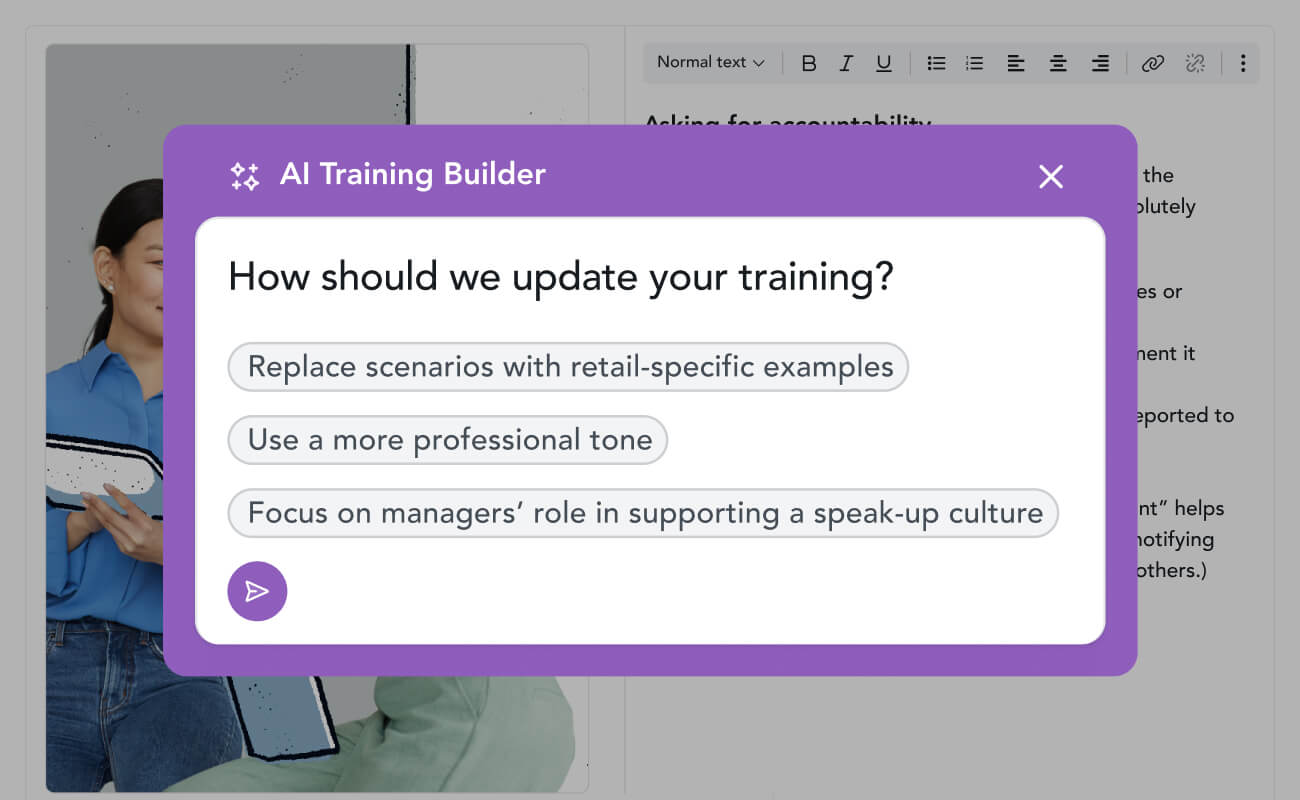
Your training copilot
Built-in AI uses your policies and prompts to customize Ethena’s top-rated content painlessly, while controls keep you compliant.
AI authoring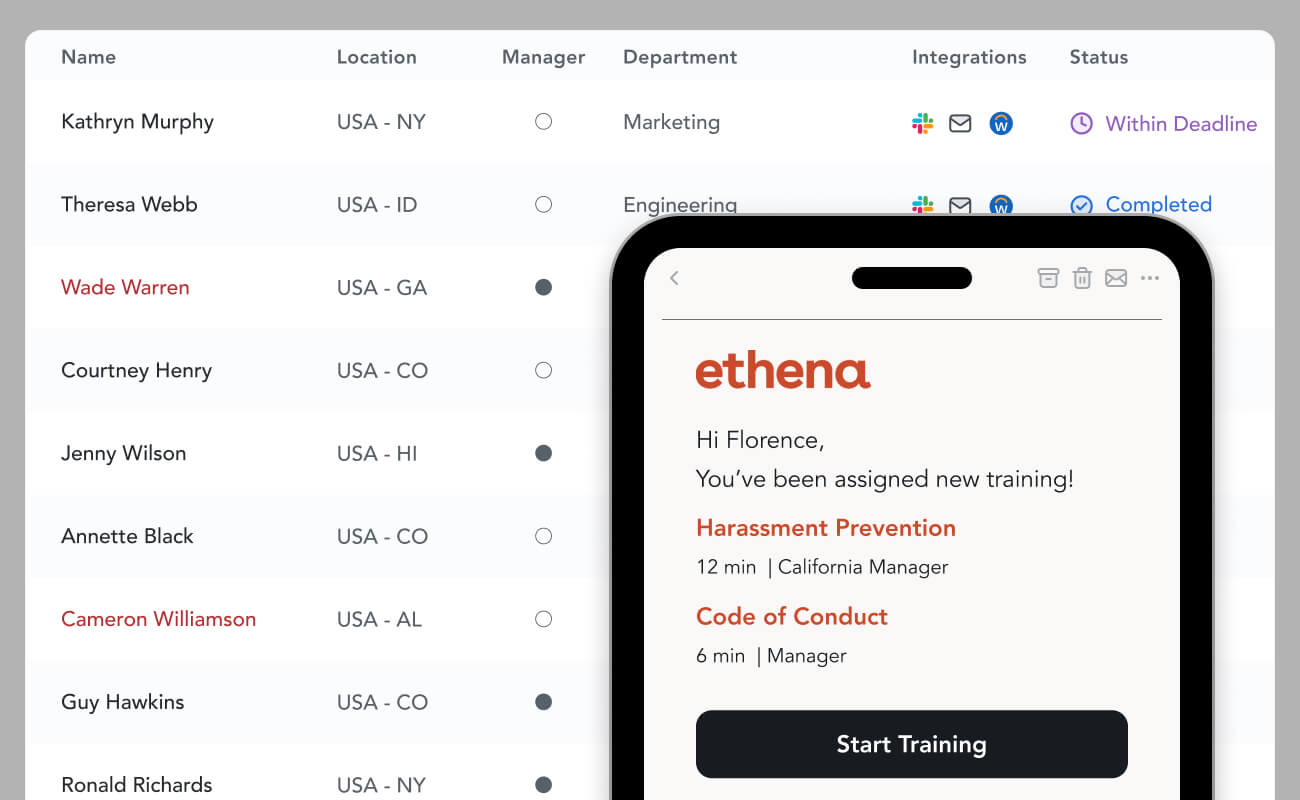
Assignments automated
Sync HRIS data to automatically deliver the right training to the right learners with automatic reminders. No more spreadsheets.
Assignment automation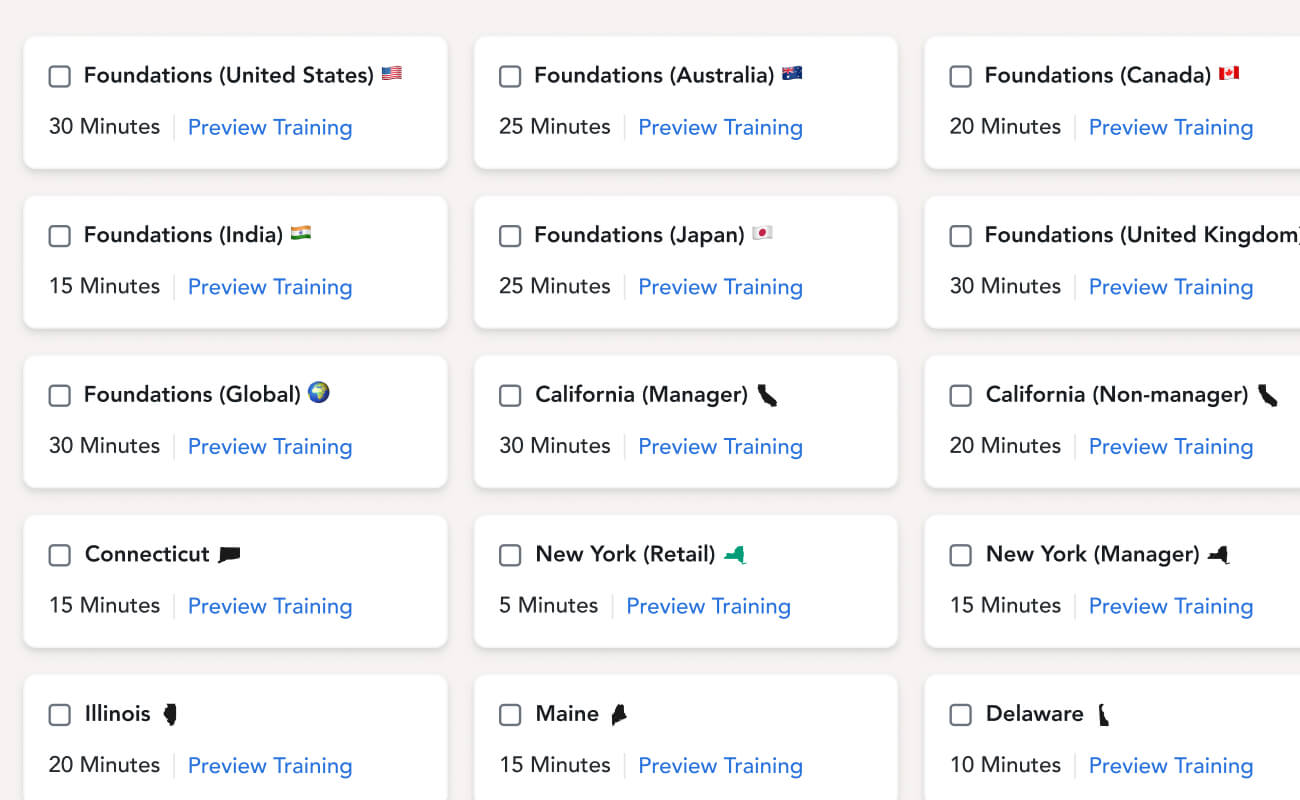
Localized content
200+ modular courses meet local, state, and country legal requirements, with fast and free translations available in dozens of languages.
See courses