
 Code of Conduct
 Ethical Mgmt
 Speak-up Culture
 Latin America
 Asia Pacific
 FX Global Code
 Financial Services
 North America
 Europe
 Middle East
 MSBs
MSBs FinTech
 Insurance
 Investing
 Casinos
 Retail Banks
 Manufacturing
 U.S. National
 Canada
 California
 New York
 Illinois
 Connecticut
 Maine
Maine Delaware
 Retail
 Warehouse
 Healthcare
 Animated
 Billing & Revenue
 IT & Admins
 Leadership
 Ontario
 British Columbia
 UK Induction
 Australia & NZ
 Workplace Violence Prevention
 Canada
 Italy
Italy Active Shooter
 AI & Workplace
 Corporate Ethics
 Whistleblower
 Gvmt Contracting
 Export Controls
Europe, the Middle East & Africa (EMEA) Anti-Bribery and Corruption Training

- AI authoring tools for easy customization
- Additional languages available
- Meets accessibility standards
- Auto-save training, mobile-friendly
- Deliver on Ethena or your LMS (SCORM)

Course Summary
Bribery and corruption hide in gifts, hospitality, and third-party deals, not just cash. This Ethena course helps your EMEA teams spot red flags and act under the region’s anti-corruption laws.
- Key EMEA anti-bribery laws and frameworks
- Gifts, travel, and entertainment red flags
- Books, records, and internal controls
- Speaking up when something looks wrong
Included Modules:
Introduction to Anti-Bribery & Corruption
Introduces why anti-bribery matters across EMEA and how this course prepares your teams to recognize, prevent, and report corruption risks at work.
The Basics: Corruption and Bribery Explained
Defines bribery, corruption, facilitation payments, and kickbacks, and shows how they surface in everyday business across the EMEA region.
Geography and Corruption Risk
Explains how corruption risk varies by country and sector, and why local context shapes the controls your teams need across EMEA markets.
Germany: Anti-Corruption Compliance
Covers Germany’s anti-corruption rules under the Criminal Code, including bribery of officials and private-sector corruption that companies must prevent.
France: Sapin II Law
Explains France’s Sapin II law, which requires large companies to adopt anti-corruption programs, risk mapping, and whistleblowing channels.
The UK Bribery Act Explained
Covers the UK Bribery Act 2010, including the corporate failure-to-prevent offence and the adequate-procedures defence companies can rely on.
Austria Anti-Bribery Laws
Outlines Austria’s anti-bribery provisions in the Criminal Code, covering bribery of public officials and corruption in private business dealings.
Italy's Legislative Decree 231
Explains Italy’s Legislative Decree 231/2001, which makes companies liable for corruption unless they adopt and follow an effective compliance model.
Luxembourg Anti-Bribery Laws
Outlines Luxembourg’s anti-corruption rules in the Criminal Code, covering active and passive bribery of public officials and private parties.
Dutch Anti-Bribery Laws
Covers the Netherlands’ anti-bribery provisions under the Dutch Criminal Code, addressing bribery of officials and corruption in the private sector.
Spain Anti-Bribery Laws
Explains Spain’s anti-corruption rules under the Penal Code, including corporate criminal liability and the compliance programs that reduce it.
The UAE Federal Penal Code: Anti-Bribery Provisions
Outlines the UAE Federal Penal Code’s anti-bribery provisions, covering bribery of public officials and corruption within private business dealings.
Recognizing High-Risk Behaviors
Helps your teams spot warning signs of bribery, such as unusual payments, vague invoices, and pressure to bypass normal approval controls.
Gifts, Travel, and Entertainment
Explains when gifts, travel, and hospitality cross the line into improper influence and how your teams should handle and record them.
Practical Anti-Bribery Strategies
Offers practical steps to prevent bribery, including due diligence, clear approvals, and knowing when to pause a deal and ask questions.
Books, Records, and Internal Controls
Explains why accurate books and strong internal controls matter, and how proper record-keeping helps detect and deter corrupt payments.
Public Officials and Corruption Risk
Explains who counts as a public official and why dealings with governments carry heightened bribery risk that demands extra care and oversight.
PEPs: What You Need to Know
Explains who politically exposed persons are, the elevated corruption risk they pose, and the enhanced due diligence your teams should apply.
Anti-Corruption Legal Frameworks
Surveys international anti-corruption frameworks like the OECD Convention and UNCAC, and how they shape national laws across the EMEA region.
What's at Stake: Bribery and Corruption
Shows the real consequences of bribery, from fines and prison to reputational damage, and why prevention protects both people and the business.
Speak Up Culture
Encourages a speak-up culture, explaining how to report concerns safely, what protections exist, and why early reporting stops corruption spreading.









Learning and compliance with AI at the core
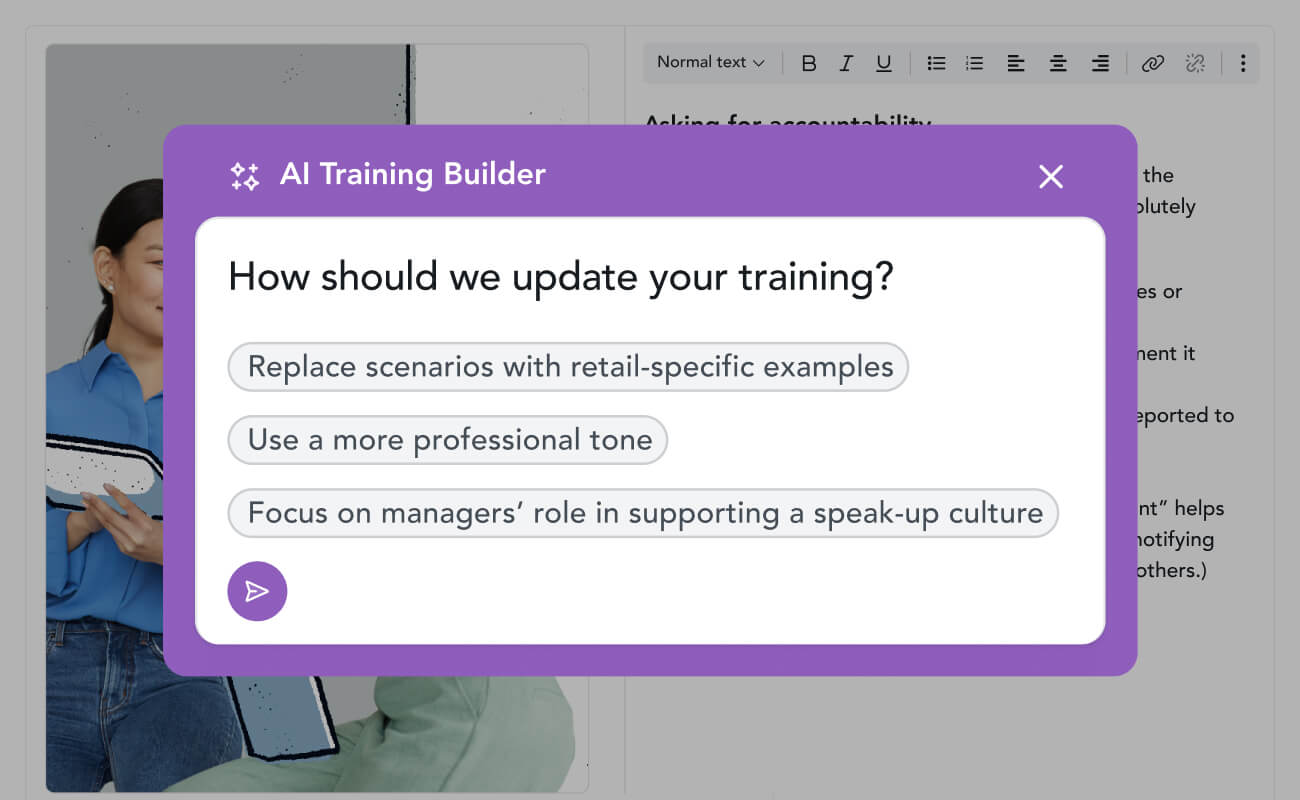
Your training copilot
Built-in AI uses your policies and prompts to customize Ethena’s top-rated content painlessly, while controls keep you compliant.
AI authoring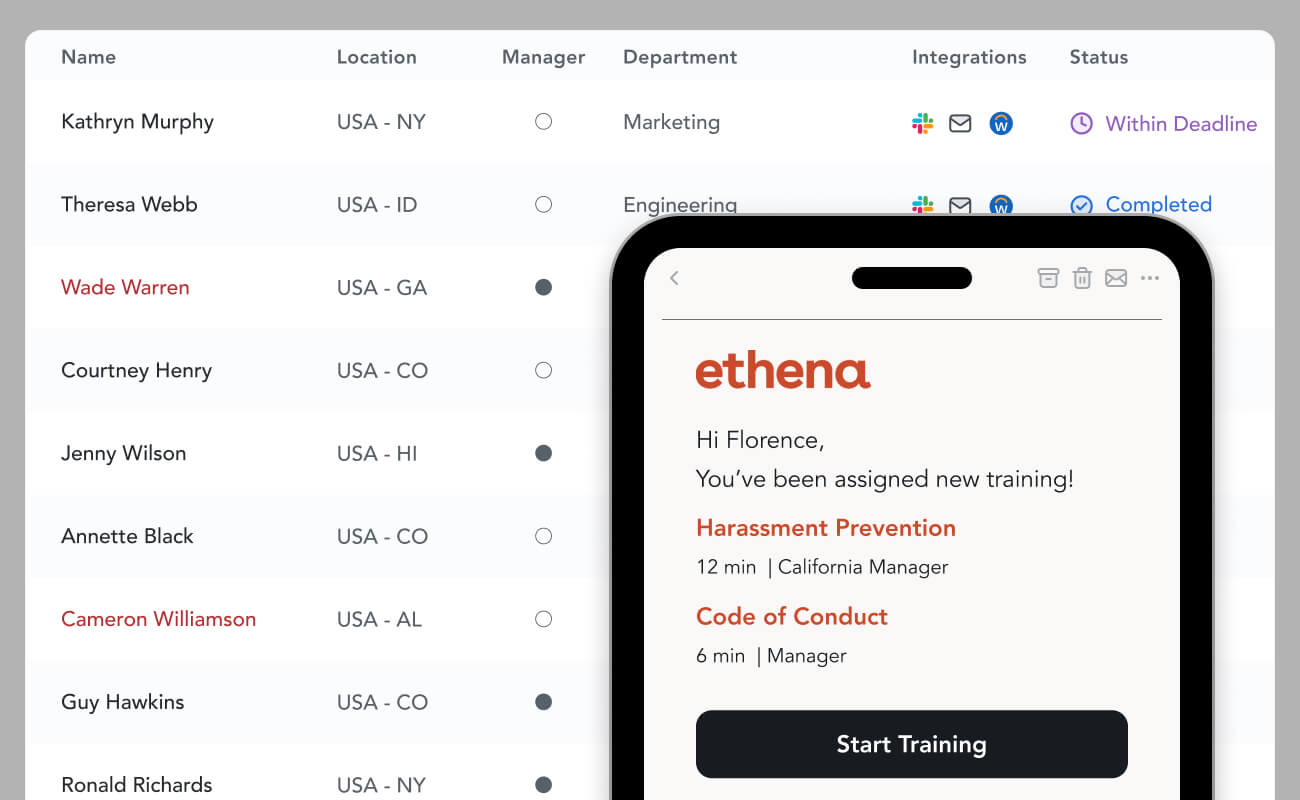
Assignments automated
Sync HRIS data to automatically deliver the right training to the right learners with automatic reminders. No more spreadsheets.
Assignment automation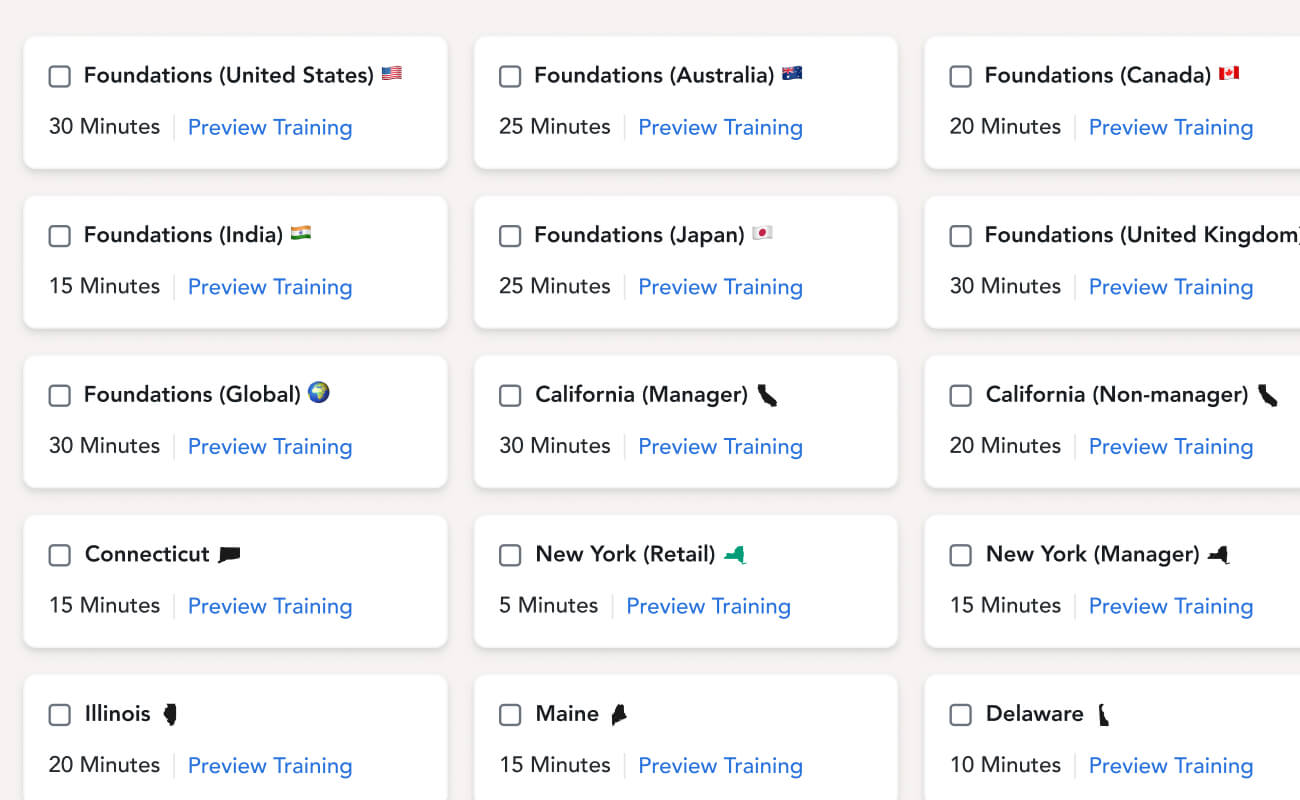
Localized content
200+ modular courses meet local, state, and country legal requirements, with fast and free translations available in dozens of languages.
See courses