 Code of Conduct
 Ethical Mgmt
 Speak-up Culture
 Latin America
 Asia Pacific
 FX Global Code
 Financial Services
 North America
 Europe
 Middle East
 MSBs
MSBs FinTech
 Insurance
 Investing
 Casinos
 Retail Banks
 Manufacturing
 U.S. National
 Canada
 California
 New York
 Illinois
 Connecticut
 Maine
Maine Delaware
 Retail
 Warehouse
 Healthcare
 Animated
 Billing & Revenue
 IT & Admins
 Leadership
 Ontario
 British Columbia
 UK Induction
 Australia & NZ
 Workplace Violence Prevention
 Canada
 Italy
Italy Active Shooter
 AI & Workplace
 Corporate Ethics
 Whistleblower
 Gvmt Contracting
 Export Controls
Last updated: May 2026
Most of the teams who leave EasyLlama for Ethena started there for the same reason: it was the most modern option they could actually get budget for. Animated, mobile-friendly, fast to roll out. Then their compliance program grew, and what they needed from a platform changed.
We talk to People Ops and Compliance teams who made that move. Here's what they told us about why.
1. The seat-and-credit math always cost more than the quote
The first surprise tends to arrive a few months in. The contract was sized for a headcount snapshot. Then someone leaves before they finish their training. Then an acquisition adds 40 people. Then a few new hires onboard in California and need supervisor-track content.
A People & Culture Generalist at a real estate company described where her renewal conversations kept landing. Her team had bought what felt like enough seats. They kept needing more. Adding seats meant another invoice, another call, another round of “what should this actually cost.” Worse, when an employee began but didn’t complete a course, that seat counted as used. A new hire backfilling the role meant buying a new seat for the same job.
A People & Culture Generalist at a transportation company described the year-over-year drift. Her per-seat rate started at $16, then $17, then $19. None of those felt large in isolation. Stacked over three renewals, the model that sold as transparent felt like a moving target.
Ethena’s pricing is built on active seats. When an employee leaves and a new hire takes their place, that seat moves to the new person. There are no overage fees. There is no per-course credit math. The number you sign for in March is the number you pay in November, regardless of how many people started a course and how many finished.
2. Gamification turned 90 minutes of training into half a workday
Click here. Drag this. Spin the wheel. Tap the tile. The mechanics are designed to keep learners awake. What teams tell us is what they do to time-in-seat.
A Senior People Operations Manager at a consumer tech company described it directly. EasyLlama claimed two hours of training, but with the click-through layered on top, it ran three to four hours for her team. Her team, she told us, was ready to lose it on her.
An HR trainer at a city government in Texas described what going from a 30-to-45-minute cycle to a 90-to-120-minute cycle did to her completion rates. The max attention span for screen-based compliance training, in her experience, is about an hour. Multiple People Ops leaders described the same Illinois bystander training stretching to two and a half, sometimes three and a half hours, once the engagement mechanics stacked on top of state-mandated time floors.
Ethena uses mixed media: video, audio, scenario-based questions, knowledge checks. We hit compliance time minimums where the law requires it. There are smarter ways to reduce seat time without cutting corners. We do not stretch past them. Your hourly workforce gets back to the floor. Your salaried workforce gets back to their week.
3. Customization meant paying for the same work every year
A People Compliance Specialist at a software company in San Francisco walked us through her team’s experience customizing their harassment training. The process meant marking up scripts in a Google Doc, sending the document back to EasyLlama, waiting for them to produce a new video version, and reviewing the output. It was a one-time fee, around $5,000. When the policy changed the following year and they wanted to update the script again, the fee applied again. Beyond scripted edits, the platform itself didn’t let her team adjust course text or imagery on their own.
A Managing Director of Learning at a UK media company put it plainly: her team had no ability to customize anything inside the platform. What they could do was tell EasyLlama what they wanted and wait for it to be built. It’s a pattern we hear from teams across the industry.
Ethena’s Training Agent lets your team edit course scripts, swap examples, add company-specific scenarios, and align content to your policies, without a six-week production cycle and without a $5,000 line item every time. You review and approve every change before it goes live, compliance in the loop. Your CCO sees a policy change in California. You update the script tomorrow.
4. Course updates overwrote the customizations you’d paid for
A Senior Director of Employee Relations at a global gaming company described one of the harder moments in her EasyLlama experience. Her team had customized course content. Then EasyLlama updated the underlying course and overwrote everything they’d built. Nobody told them.
She was direct about the cost: she’d paid for those customizations once, and now had to choose between paying again, accepting the default content, or finding a new vendor.
At Ethena, course updates are versioned. You control when updates apply to your assigned courses. If we change a course you’ve customized, your customizations are preserved, and we tell you what changed so you can choose the timing. The platform that protects your customizations is the same one that lets you build them.
5. Getting your own content out for an audit was a fight
This one comes up around audit season. When teams needed a video file, a transcript, or the slide and module content behind a course, to hand to an auditor, to keep for their records, or to move elsewhere, the answer from EasyLlama was often no. The content they were training their own employees on, and paying for, wasn’t something they could simply take with them.
At Ethena, your content is yours to take. Video files, transcripts, slide and module content: if you need it for an audit or your own records, you can export it. And with Compass, you can pull full-course transcripts on demand. When an auditor asks what your people actually saw, the answer is in your hands, not in a support ticket.
6. Support went quiet after the contract was signed
This was one of the most consistent patterns in our research, across industries. The sales process gets praised. The experience after signing gets described very differently.
An HR Generalist at a fintech company described implementation after she signed. CSV uploads kept failing. Her CSM had been introduced once and then never responded again. Support tickets opened, emails read, no replies. She watched her own emails get marked as read 11 times without a single response. A Director of People and Culture at an edtech company described a different version of the same shape: two CSM changes in roughly eighteen months.
Ethena assigns a dedicated CSM at signing, and that person stays with your account. They sit in on planning calls when you’re rolling out a new module. They flag regulatory changes that affect your jurisdictions. They don’t disappear after the launch confetti.
7. As the program got more complex, the manual work came back
For a team launching their first real compliance program, EasyLlama is a defensible starting point. What teams describe is what happens in year two.
A Director of People Operations at a biotech company walked us through hers. New hires kept landing in the platform without the right courses auto-assigning: anti-bribery and anti-corruption, harassment prevention for supervisors versus non-supervisors. The HRIS integration with Rippling existed on paper. It didn’t do the assignment work. She spent her own time, as a team of one, hand-assigning courses the platform had been sold as automating. A People Ops leader at a construction services company described running three platforms in parallel: one for safety, one for benefits-related training, and EasyLlama for the rest. She wanted one place. She couldn’t get there with the vendor she had.
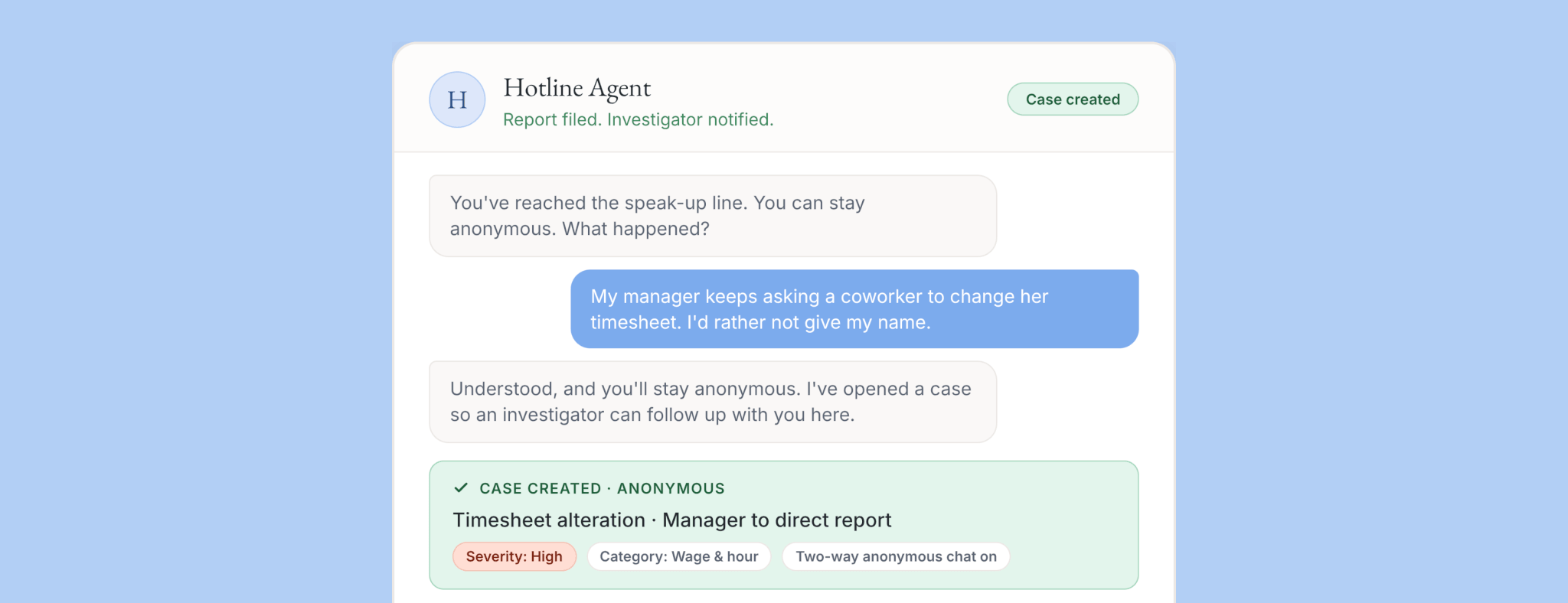
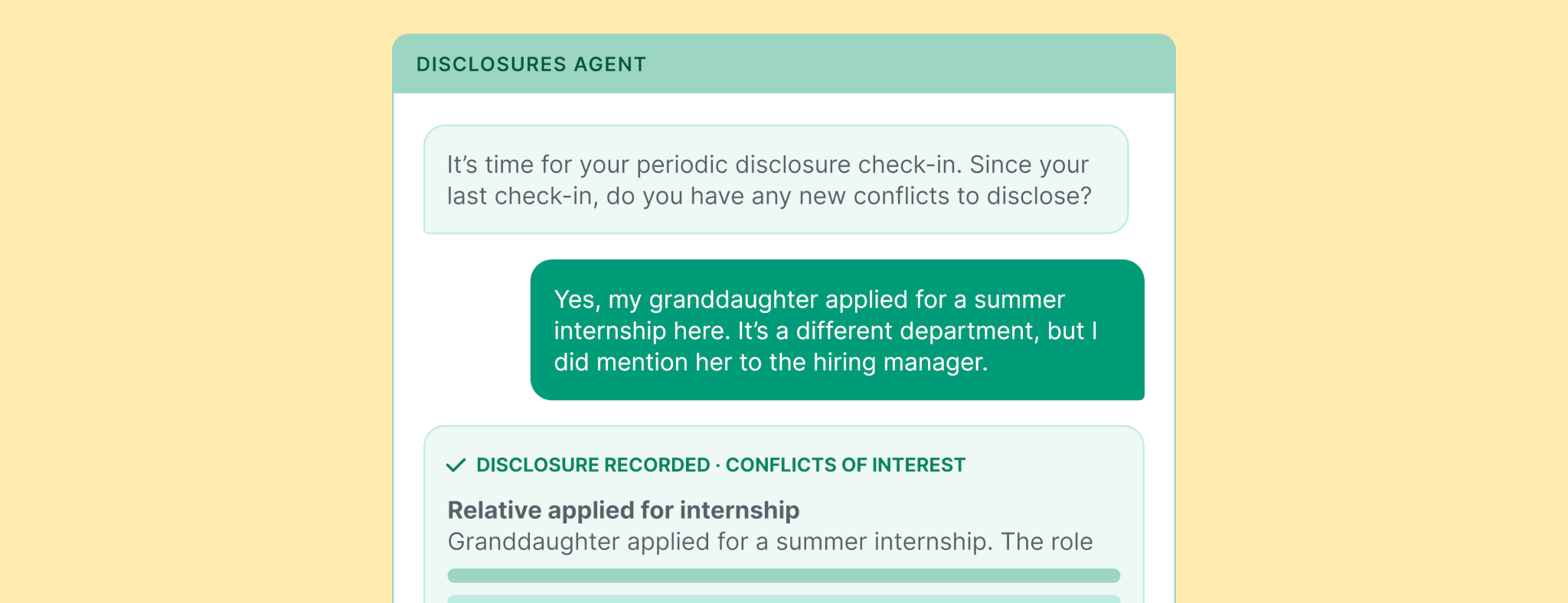
Ethena is one platform of four AI compliance agents: a Training Agent that builds and adjusts content without our help, a Disclosures Agent that runs your ethics hotline and case management, a Policy Agent that keeps policies and training aligned, and a 3rd Party Risk Agent that screens your vendors. Compliance in the loop on all of it: the agents draft and surface, you approve and decide. One platform, one bill, no stitching.
Your People Ops team gets a single place to run the day-to-day. Your CCO gets the audit trail without the export-and-VLOOKUP ritual. Your General Counsel gets case management visibility. Susan Divers, who advises us on the compliance side, and our in-house General Counsel both work on this same platform, because the product has to be true for People Ops and the legal team at the same time.
Making the switch
If your compliance program has outgrown the tool you started with, that’s not a planning failure. It’s what happens when a program matures. Ethena is built for where it’s headed: customization your team controls with compliance in the loop, content and records you can actually export, transparent active-seat pricing, and one platform instead of three. 96% of our customers renew year over year. We think that says more than we could.