
 Code of Conduct
 Ethical Mgmt
 Speak-up Culture
 Latin America
 Asia Pacific
 FX Global Code
 Financial Services
 North America
 Europe
 Middle East
 MSBs
MSBs FinTech
 Insurance
 Investing
 Casinos
 Retail Banks
 Manufacturing
 U.S. National
 Canada
 California
 New York
 Illinois
 Connecticut
 Maine
Maine Delaware
 Retail
 Warehouse
 Healthcare
 Animated
 Billing & Revenue
 IT & Admins
 Leadership
 Ontario
 British Columbia
 UK Induction
 Australia & NZ
 Workplace Violence Prevention
 Canada
 Italy
Italy Active Shooter
 AI & Workplace
 Corporate Ethics
 Whistleblower
 Gvmt Contracting
 Export Controls
US Regulation FD: Fair Disclosure Training

- AI authoring tools for easy customization
- Additional languages available
- Meets accessibility standards
- Auto-save training, mobile-friendly
- Deliver on Ethena or your LMS (SCORM)

Course Summary
Selective disclosure can hand some investors an unfair edge. This Ethena course explains the SEC’s Regulation FD so your team knows what counts as material non-public information and how to disclose it fairly and lawfully.
- Why Reg FD exists and who it covers
- Material non-public information explained
- Intentional vs inadvertent disclosure
- How to disclose publicly and avoid penalties
Included Modules:
Why Reg FD Exists
Explains how the SEC adopted Regulation FD in 2000 to stop selective disclosure and ensure all investors get material information at the same time.
Who and What It Covers
Outlines which issuers and company spokespeople Regulation FD applies to, and which outside parties trigger its fair disclosure obligations.
What Counts as Material Non-Public Information
Explains what makes information material and non-public, and why selectively sharing it with analysts or investors can breach Regulation FD.
Intentional vs. Inadvertent Disclosure
Distinguishes intentional selective disclosure, which needs simultaneous public release, from accidental slips, which require prompt disclosure.
Permitted Disclosures and Safe Harbors
Covers the disclosures Regulation FD excludes, such as those to people owing a duty of confidence or bound by a non-disclosure agreement.
How to Disclose Publicly
Shows the approved methods for sharing material information broadly, including SEC filings, press releases, and adequately noticed earnings calls or webcasts.
Enforcement, Penalties, and Real Cases
Reviews how the SEC enforces Regulation FD through cease-and-desist orders and civil penalties, using real cases to show what selective disclosure costs.
Your Responsibilities Day to Day
Gives practical guidance for handling investor contact, routing inquiries to authorized spokespeople, and avoiding accidental leaks of material non-public information.









Learning and compliance with AI at the core
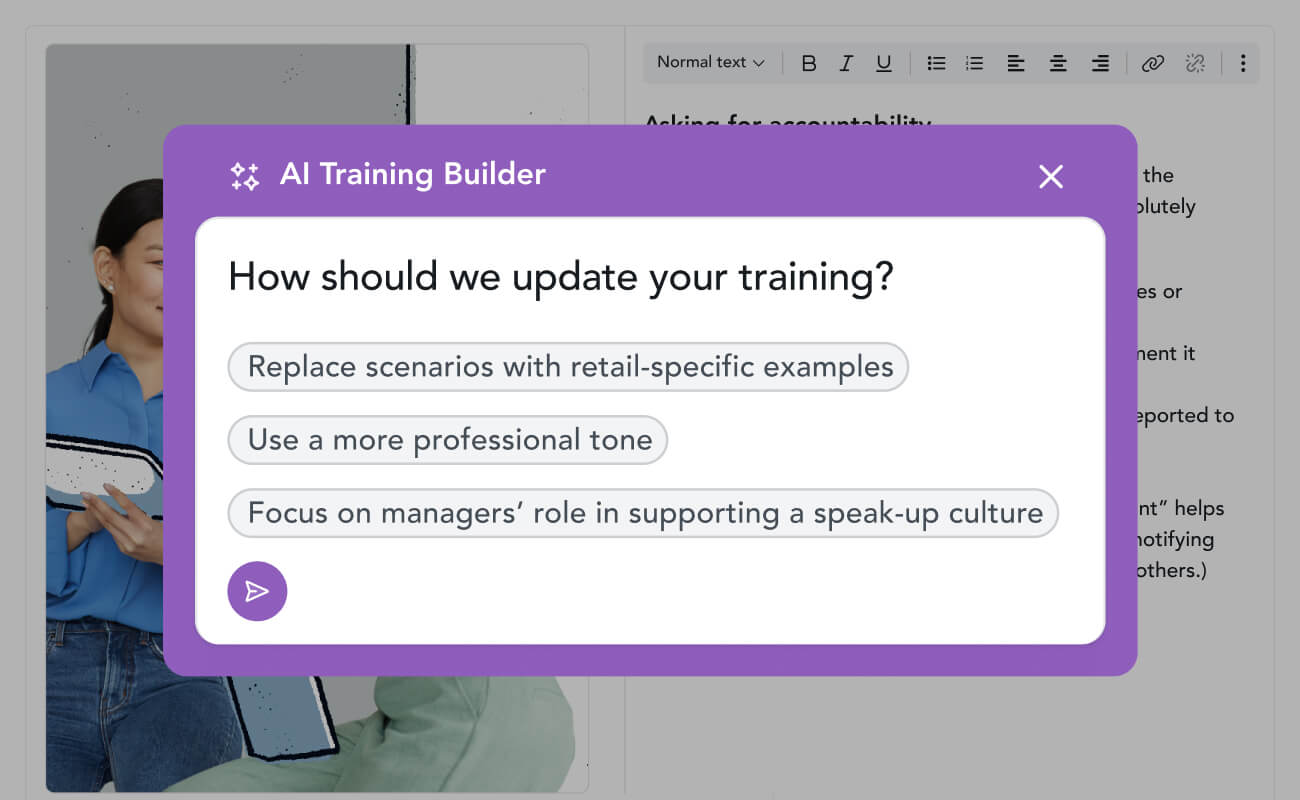
Your training copilot
Built-in AI uses your policies and prompts to customize Ethena’s top-rated content painlessly, while controls keep you compliant.
AI authoring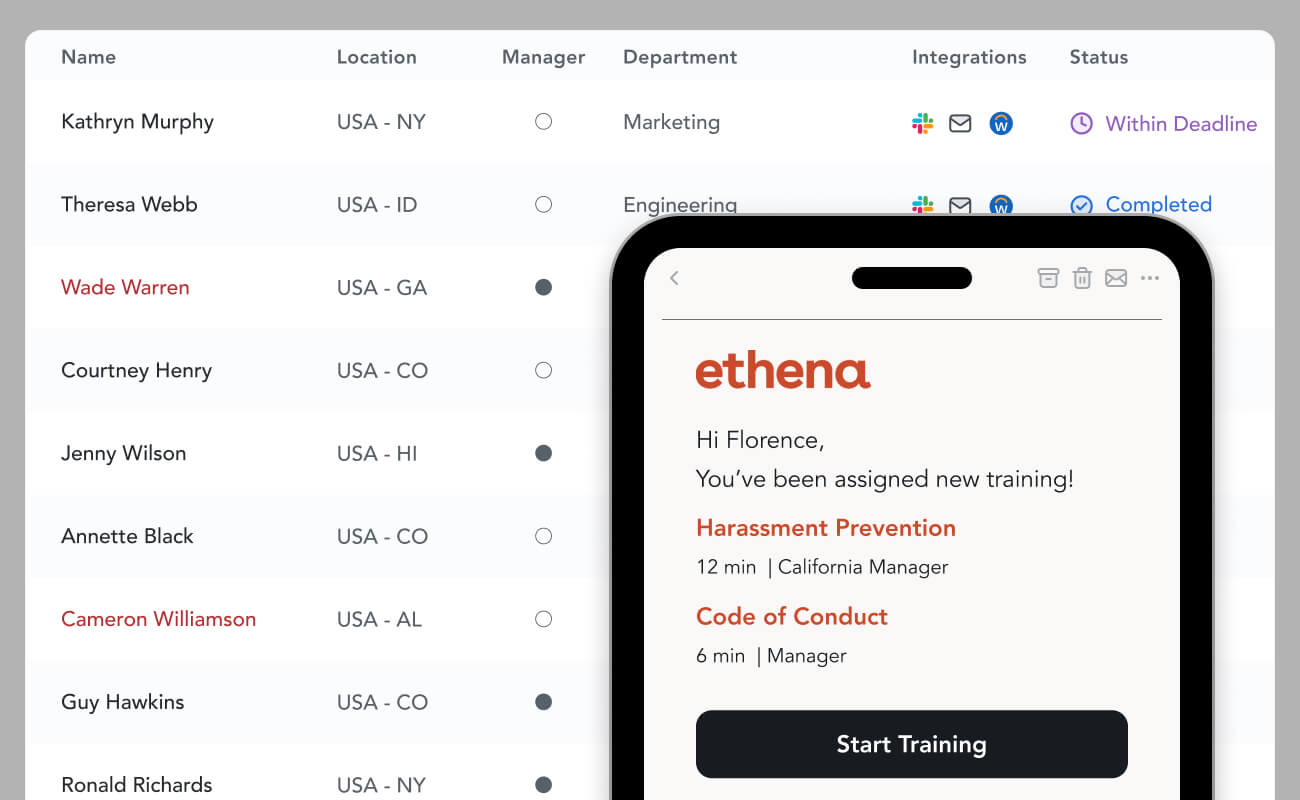
Assignments automated
Sync HRIS data to automatically deliver the right training to the right learners with automatic reminders. No more spreadsheets.
Assignment automation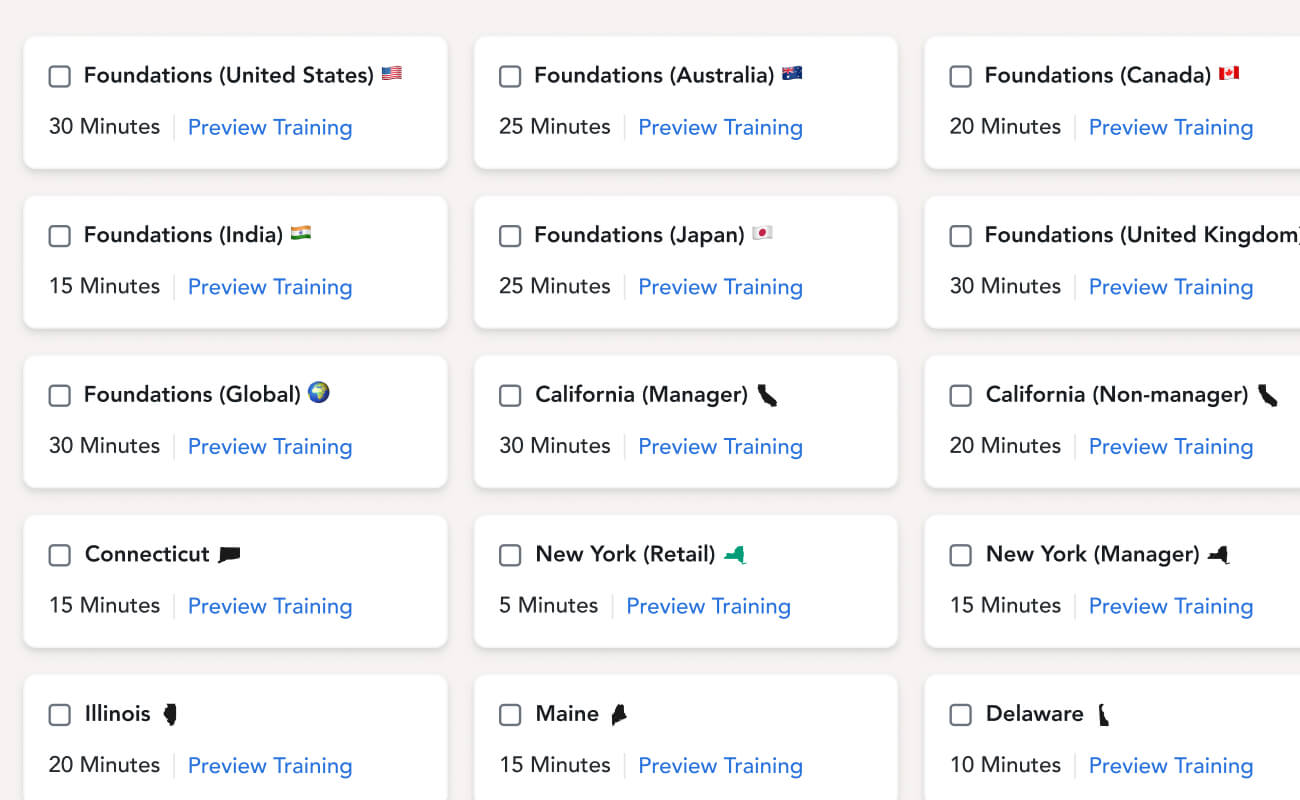
Localized content
200+ modular courses meet local, state, and country legal requirements, with fast and free translations available in dozens of languages.
See courses