
 Code of Conduct
 Ethical Mgmt
 Speak-up Culture
 Latin America
 Asia Pacific
 FX Global Code
 Financial Services
 North America
 Europe
 Middle East
 MSBs
MSBs FinTech
 Insurance
 Investing
 Casinos
 Retail Banks
 Manufacturing
 U.S. National
 Canada
 California
 New York
 Illinois
 Connecticut
 Maine
Maine Delaware
 Retail
 Warehouse
 Healthcare
 Animated
 Billing & Revenue
 IT & Admins
 Leadership
 Ontario
 British Columbia
 UK Induction
 Australia & NZ
 Workplace Violence Prevention
 Canada
 Italy
Italy Active Shooter
 AI & Workplace
 Corporate Ethics
 Whistleblower
 Gvmt Contracting
 Export Controls
US Healthcare Compliance Essentials Training

- AI authoring tools for easy customization
- Additional languages available
- Meets accessibility standards
- Auto-save training, mobile-friendly
- Deliver on Ethena or your LMS (SCORM)

Course Summary
Healthcare compliance keeps patient care honest and protects your organization from serious legal risk. This Ethena course gives teams a practical grounding in the rules that govern how you engage healthcare professionals, market products, and report problems.
- Who counts as a healthcare professional
- Engaging providers and groups compliantly
- Key laws like Anti-Kickback and False Claims
- Reporting adverse events the right way
Included Modules:
Who Counts as a Healthcare Professional
Defines who qualifies as a healthcare professional, including physicians, nurses, pharmacists, and other licensed staff whose decisions affect patient care.
Engaging Healthcare Professionals Compliantly
Covers compliant ways to interact with healthcare professionals, keeping consulting arrangements, payments, and gifts within legal and fair-market-value limits.
Best Practices for Healthcare Marketing
Outlines rules for healthcare marketing, ensuring product promotion stays truthful, on-label, and free of misleading claims under the FDA’s FD&C Act.
What Patient and Advocacy Group Interactions Require of You
Explains expectations for working with patients and advocacy groups, keeping support transparent, independent, and free from improper influence over treatment choices.
Understanding the Anti-Kickback Statute
Explains the federal Anti-Kickback Statute, which bars offering or receiving anything of value to induce federally reimbursed healthcare referrals.
The False Claims Act
Describes the False Claims Act, which penalizes submitting false or fraudulent claims for payment to federal healthcare programs like Medicare and Medicaid.
Your Obligations Around Adverse Events
Details your duty to recognize and report adverse events promptly, helping protect patient safety and meet FDA pharmacovigilance requirements.









Learning and compliance with AI at the core
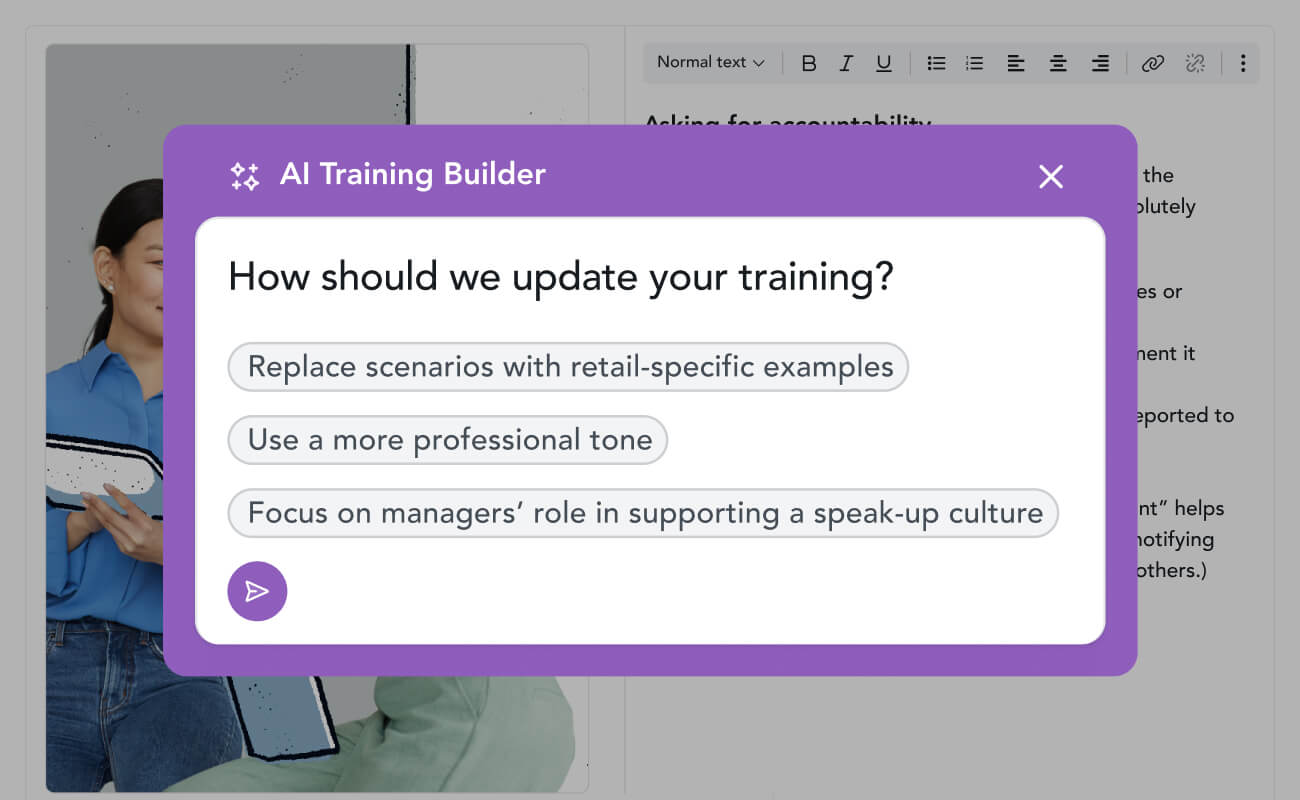
Your training copilot
Built-in AI uses your policies and prompts to customize Ethena’s top-rated content painlessly, while controls keep you compliant.
AI authoring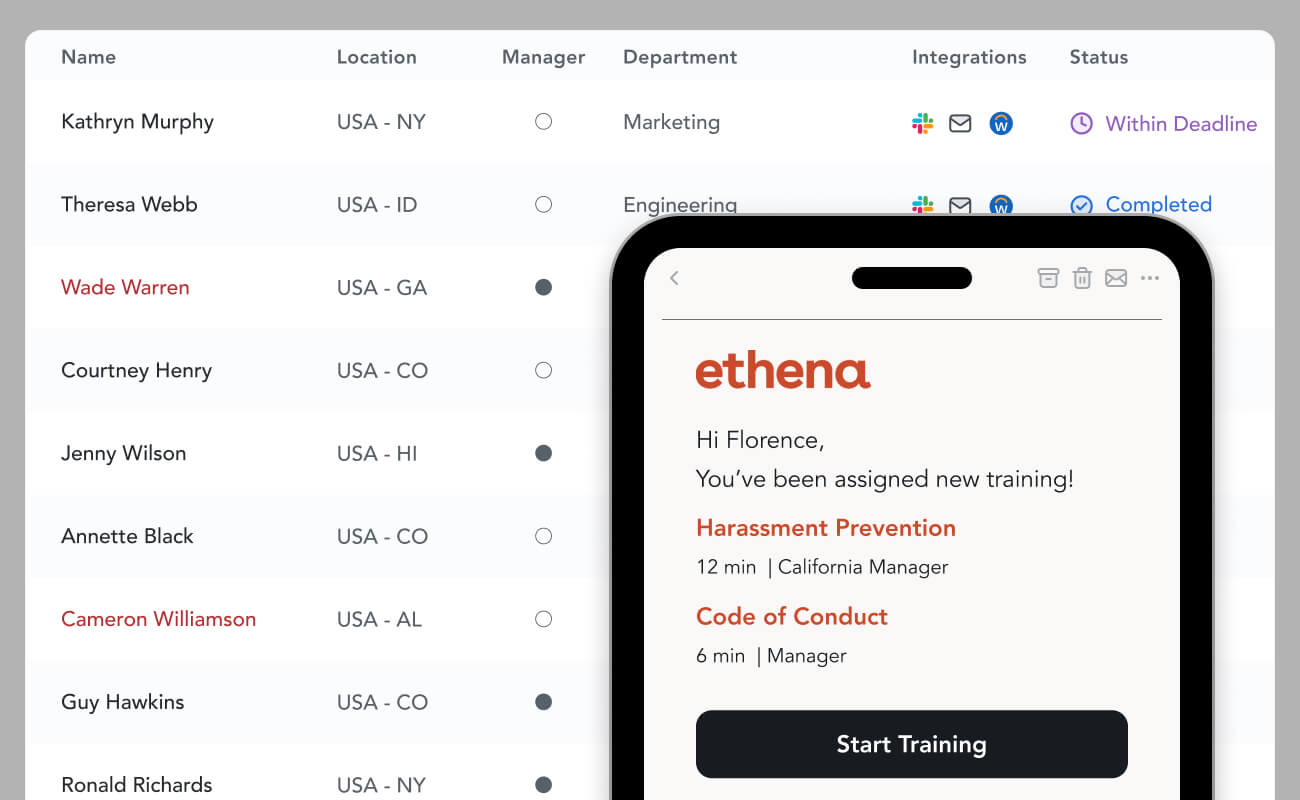
Assignments automated
Sync HRIS data to automatically deliver the right training to the right learners with automatic reminders. No more spreadsheets.
Assignment automation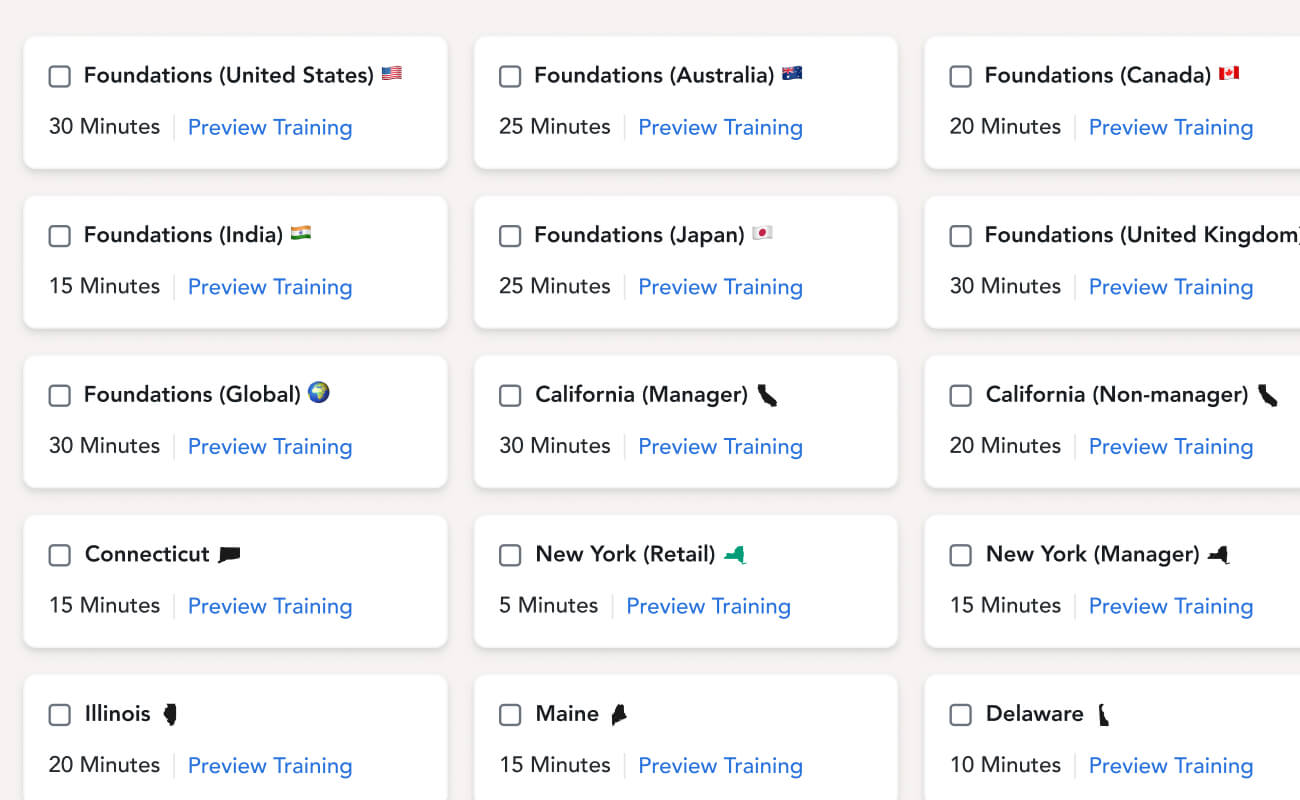
Localized content
200+ modular courses meet local, state, and country legal requirements, with fast and free translations available in dozens of languages.
See courses