
 Code of Conduct
 Ethical Mgmt
 Speak-up Culture
 Latin America
 Asia Pacific
 FX Global Code
 Financial Services
 North America
 Europe
 Middle East
 MSBs
MSBs FinTech
 Insurance
 Investing
 Casinos
 Retail Banks
 Manufacturing
 U.S. National
 Canada
 California
 New York
 Illinois
 Connecticut
 Maine
Maine Delaware
 Retail
 Warehouse
 Healthcare
 Animated
 Billing & Revenue
 IT & Admins
 Leadership
 Ontario
 British Columbia
 UK Induction
 Australia & NZ
 Workplace Violence Prevention
 Canada
 Italy
Italy Active Shooter
 AI & Workplace
 Corporate Ethics
 Whistleblower
 Gvmt Contracting
 Export Controls
EU Whistleblower Reporting Training

- AI authoring tools for easy customization
- Additional languages available
- Meets accessibility standards
- Auto-save training, mobile-friendly
- Deliver on Ethena or your LMS (SCORM)

Course Summary
Speaking up about wrongdoing takes courage, and EU law now protects those who do. This Ethena course explains the EU Whistleblower Directive so your team knows what to report, how to report it, and how they are protected.
- What whistleblowing is and what to report
- Internal and external reporting channels
- Confidentiality and protection from retaliation
- Building a genuine speak-up culture
Included Modules:
Introduction: Why Speaking Up Matters
Sets the stage for the course, explaining how raising concerns early protects colleagues, customers, and the organisation from serious harm and lasting damage.
Understanding Whistleblowing
Defines whistleblowing under the EU Directive and explains who counts as a whistleblower and why their reports matter to everyone at work.
What Should Be Reported?
Outlines the breaches of specified EU law areas the directive covers, helping you recognise the concerns worth reporting through the proper channels.
What is NOT Whistleblowing?
Clarifies what falls outside the directive, such as personal grievances or HR complaints, so reports reach the right process every time.
How to Report: Internal and External Channels
Explains the internal and external reporting channels the EU Whistleblower Directive requires, and when each one is the appropriate choice.
Manager Liability and Responsibilities in Whistleblowing
Covers what managers must do when a concern is raised, including their duty to act fairly and never block or punish a report.
How to Report a Concern
Walks through the practical steps for making a report, from gathering details to choosing a channel and knowing what happens next.
Confidentiality and Protection from Retaliation
Covers how the directive protects a whistleblower’s identity and shields them from dismissal, demotion, or any other form of retaliation.
Best Practices for a Speak-Up Culture
Shares everyday habits and leadership behaviours that build trust, so people feel safe raising concerns and the organisation acts on them.









Learning and compliance with AI at the core
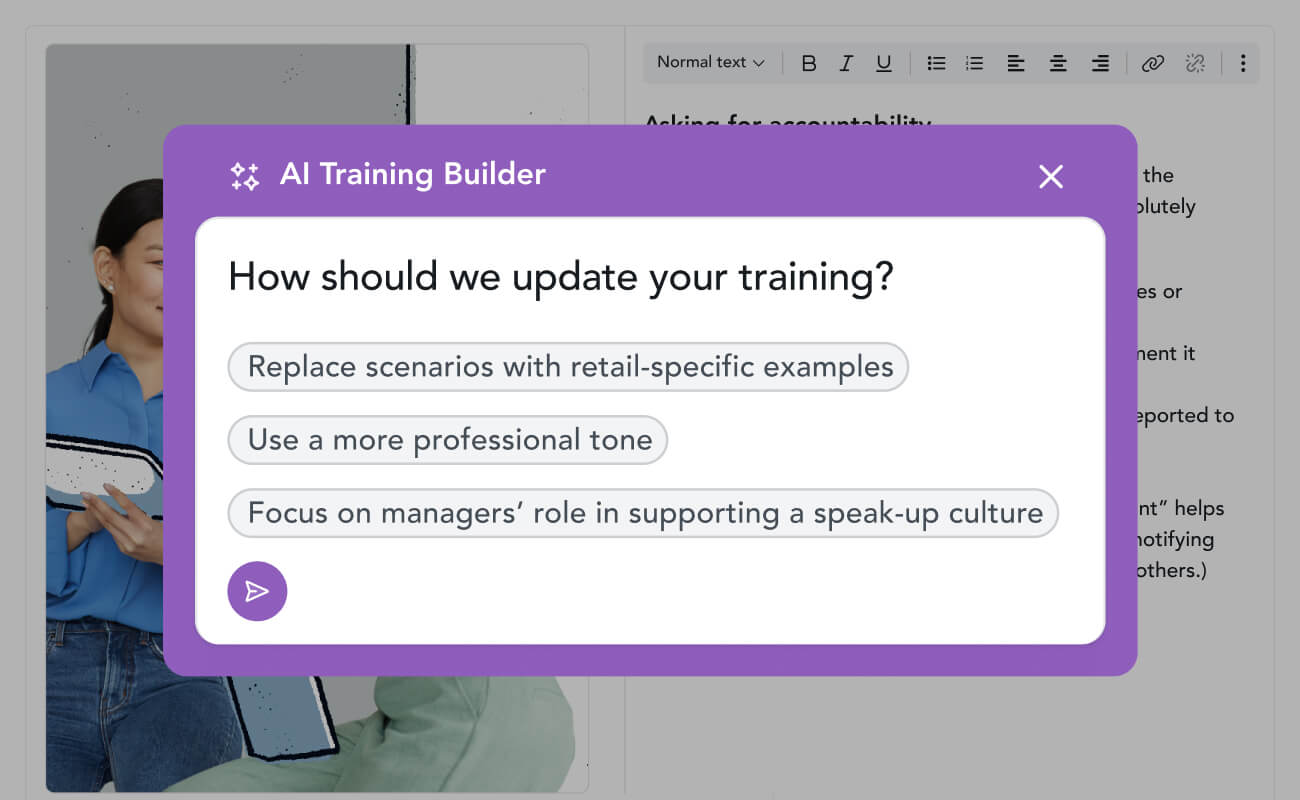
Your training copilot
Built-in AI uses your policies and prompts to customize Ethena’s top-rated content painlessly, while controls keep you compliant.
AI authoring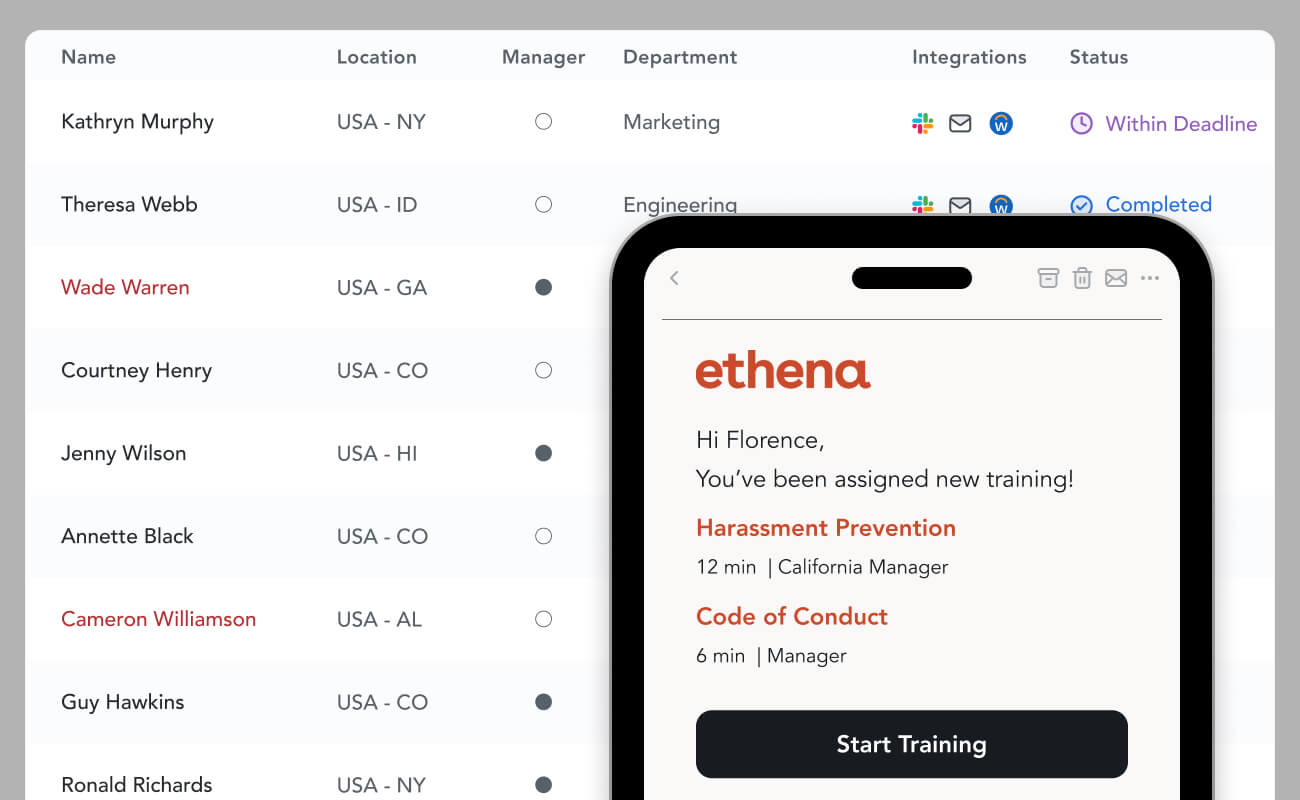
Assignments automated
Sync HRIS data to automatically deliver the right training to the right learners with automatic reminders. No more spreadsheets.
Assignment automation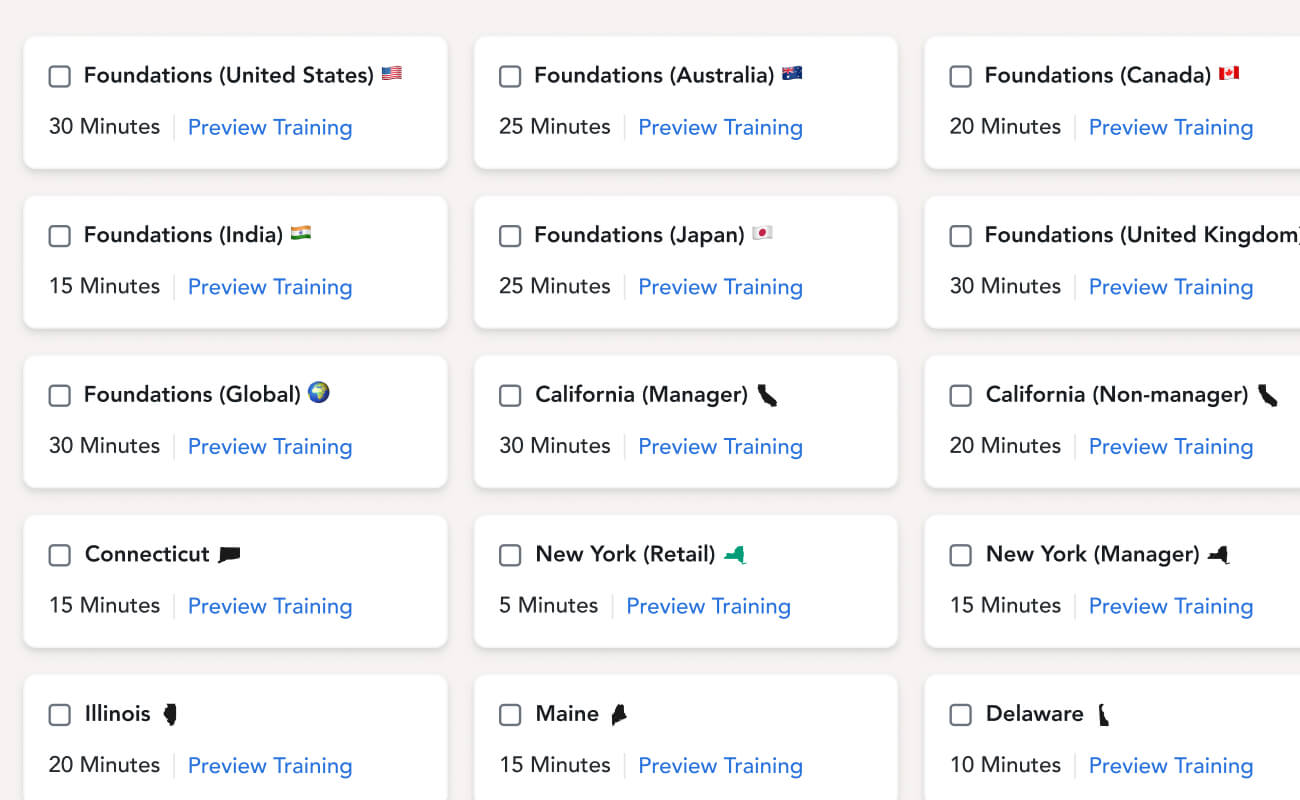
Localized content
200+ modular courses meet local, state, and country legal requirements, with fast and free translations available in dozens of languages.
See courses