
 California
 New York
 Illinois
 Connecticut
 Maine
Maine Delaware
Bystander Intervention Training
- Included with Harassment Prevention course
- Designed to meet Chicago Ordinance 2022-665
- AI authoring tools for easy customization
- Additional languages available
- Meets accessibility standards
- Auto-save training, mobile-friendly
- Deliver on Ethena or your LMS (SCORM)
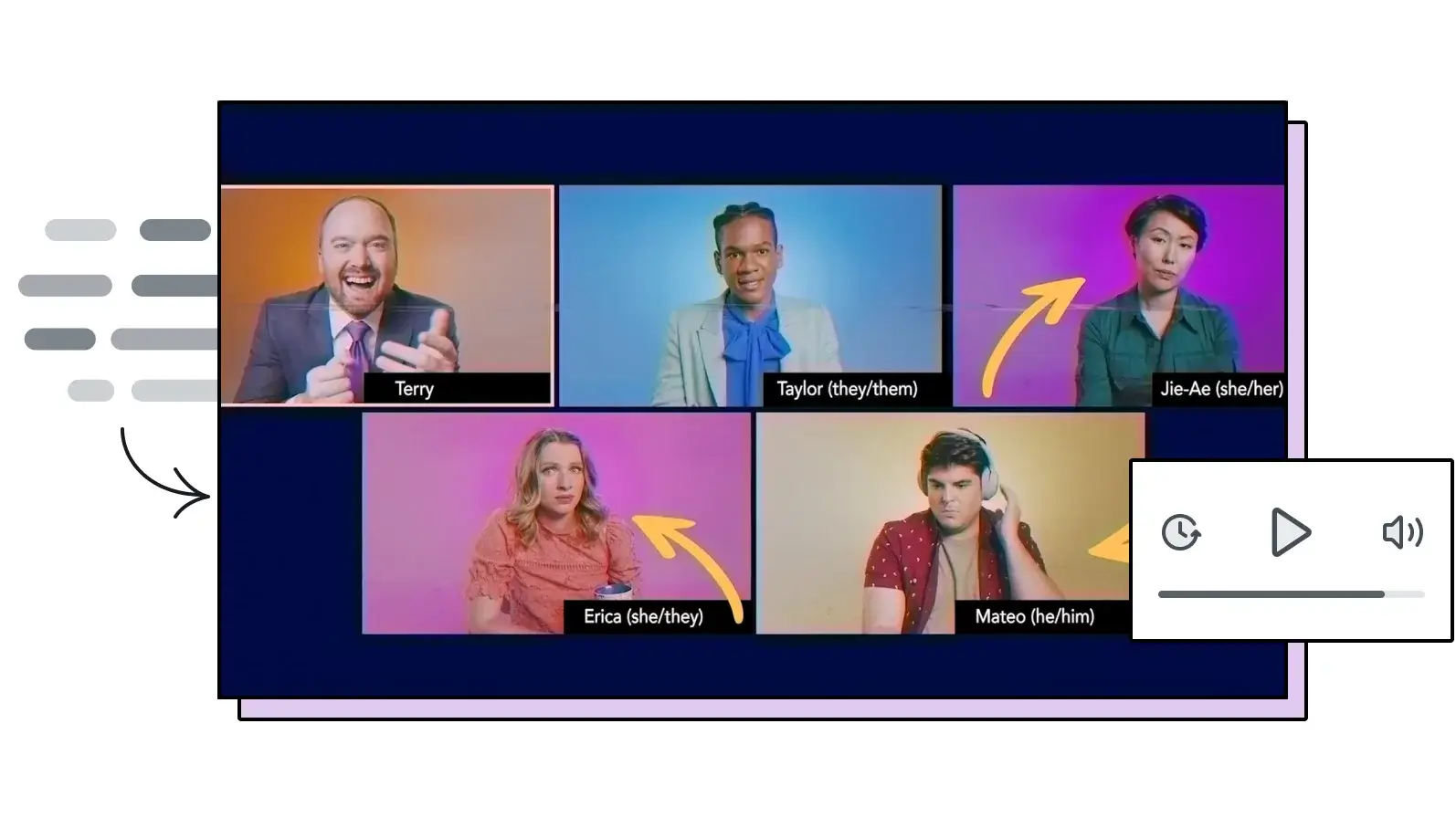
Course Summary
Ethena’s Bystander Intervention training equips employees with the skills and confidence to recognize, respond to, and report inappropriate behavior in the workplace. Grounded in research and real-world scenarios, this course helps employees become active participants in building a safer, more respectful culture.
Key learning objectives:
- Understand the role of a bystander and why intervention matters in preventing harassment, discrimination, and other forms of misconduct.
- Satisfy the requirements of Chicago Ordinance 2022-665, which mandates that all employers with employees working in Chicago provide annual bystander intervention training.
- Learn proven bystander intervention techniques, including the 4Ds model (Distract, Delegate, Delay, and Document), to respond safely and effectively.
- Build empathy and awareness through scenario-based learning that reflects modern workplace dynamics.
Bystander Intervention Training: Frequently Asked Questions (FAQs)
What is the bystander effect?
The bystander effect is a psychological phenomenon where individuals are less likely to help someone in need when others are present. The more people who witness an incident, the more likely it is that each person assumes someone else will step in — resulting in inaction. This diffusion of responsibility can lead to serious consequences, especially in workplace settings where harassment or misconduct might go unchallenged. Bystander intervention training is designed to counteract this effect by giving employees the tools and confidence to recognize when something’s wrong and take appropriate action, even if no one else is speaking up.
What are the 4 Ds of bystander intervention?
The 4 Ds of bystander intervention — Direct, Distract, Delegate, and Delay — offer a simple framework for safely stepping in when you witness harmful behavior.
- Direct means addressing the situation head-on, like telling someone their comment is inappropriate.
- Distract involves interrupting the behavior indirectly, such as changing the subject or creating a diversion.
- Delegate is about getting help from someone else, like a manager or HR.
- Delay means checking in with the person affected after the fact to offer support. These options give employees multiple ways to take action, depending on what feels safe and appropriate in the moment.
How often should employees be trained on bystander intervention?
According to Ordinance 2022-665, all employees in Chicago (including supervisors and managers) must receive at least one hour of bystander intervention training each year.
What is Chicago Ordinance 2022-665?
Effective July 1, 2022, Chicago Ordinance 2022-665 mandates that all employers with employees working in Chicago provide annual bystander intervention training. This requirement is in addition to the existing sexual harassment prevention training obligations. Specifically, all employees must receive at least one hour of bystander intervention training each year, while supervisors and managers are required to complete two hours of sexual harassment prevention training, plus the additional one hour of bystander training annually.
What are the benefits of bystander intervention training?
Bystander intervention training empowers employees to recognize problematic behavior and take safe, constructive action, leading to a safer and more respectful workplace. It helps build a culture of accountability by reinforcing that everyone — not just HR or leadership — has a role in upholding workplace standards.
When employees see their peers stepping in, they’re more likely to trust the system and feel safe reporting issues themselves. This kind of early intervention also reduces legal and reputational risk by addressing misconduct before it escalates. Importantly, it can help disrupt patterns of harassment or discrimination, especially in environments where marginalized voices may not always feel empowered to speak up. In short: it’s not just about spotting what’s wrong — but rather knowing how to respond.








Learning and compliance with AI at the core
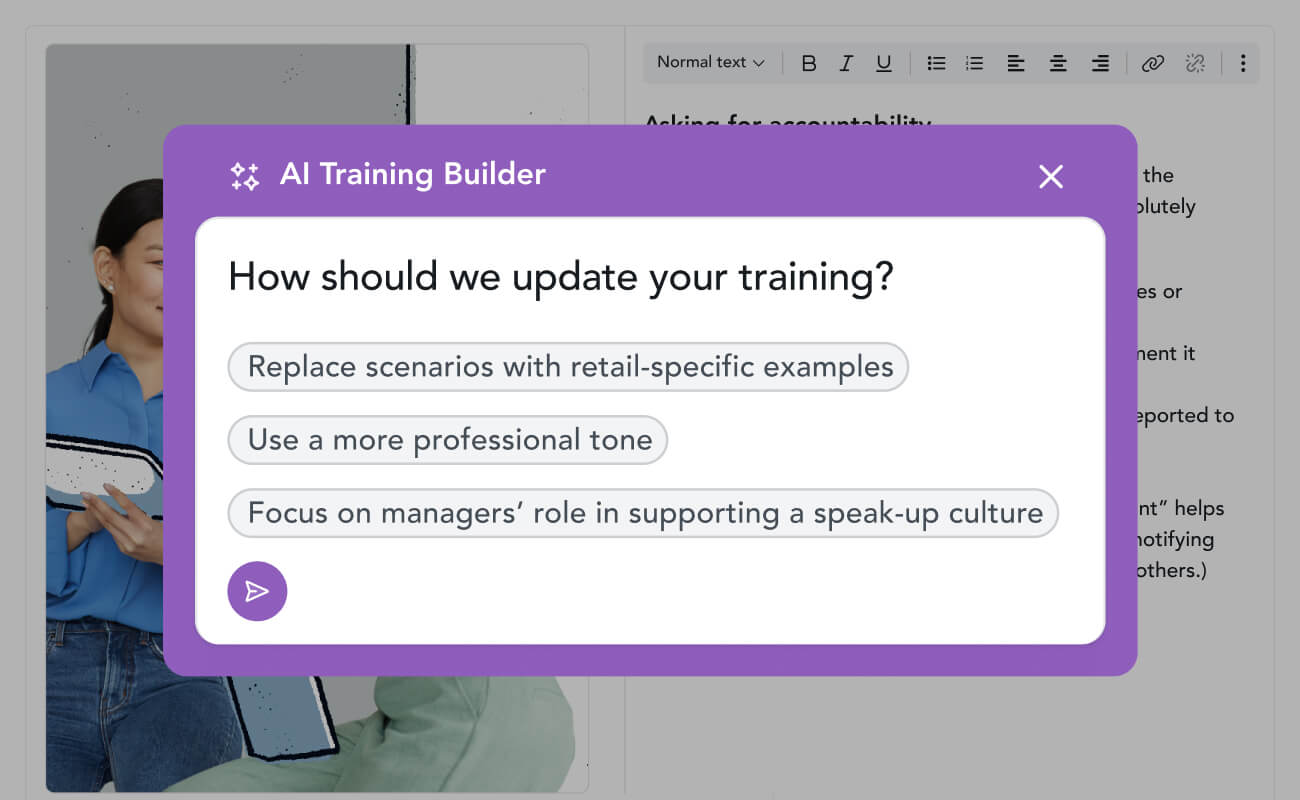
Your training copilot
Built-in AI uses your policies and prompts to customize Ethena’s top-rated content painlessly, while controls keep you compliant.
AI authoring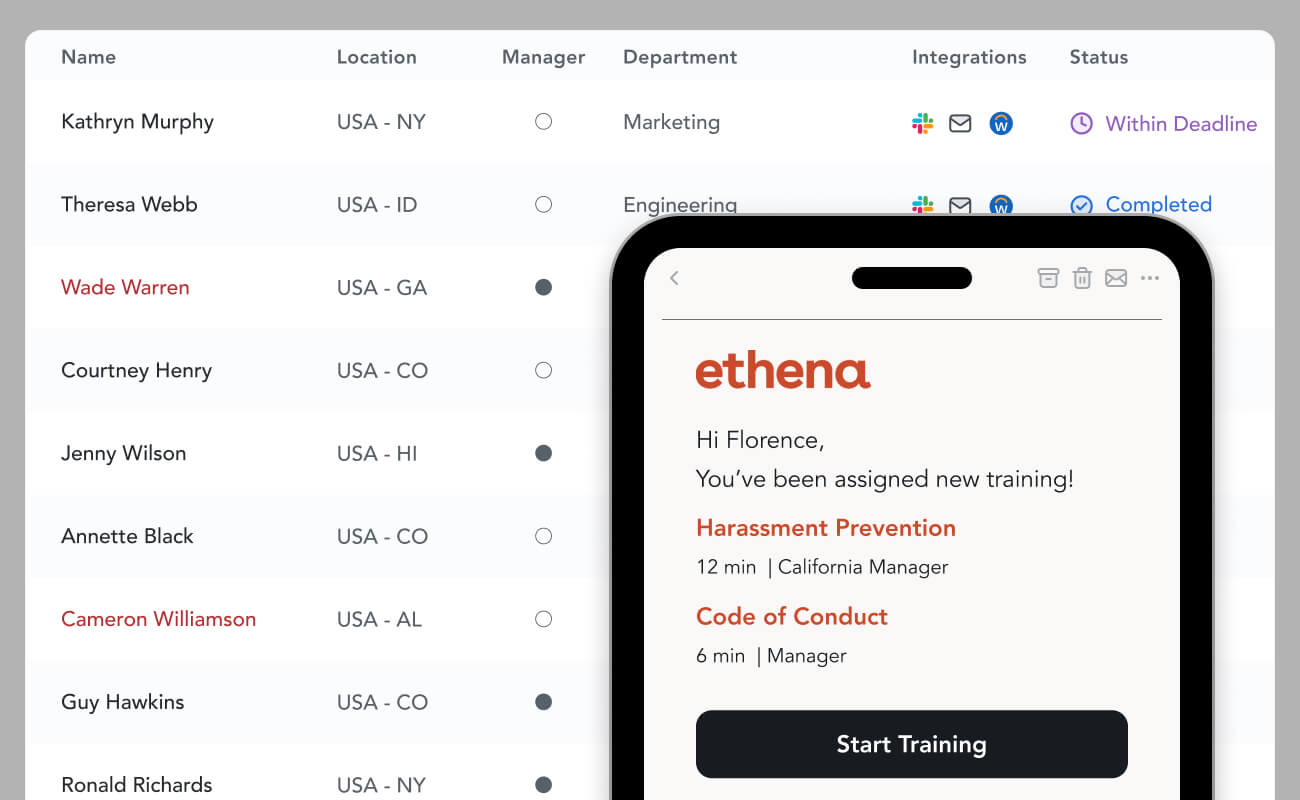
Assignments automated
Sync HRIS data to automatically deliver the right training to the right learners with automatic reminders. No more spreadsheets.
Assignment automation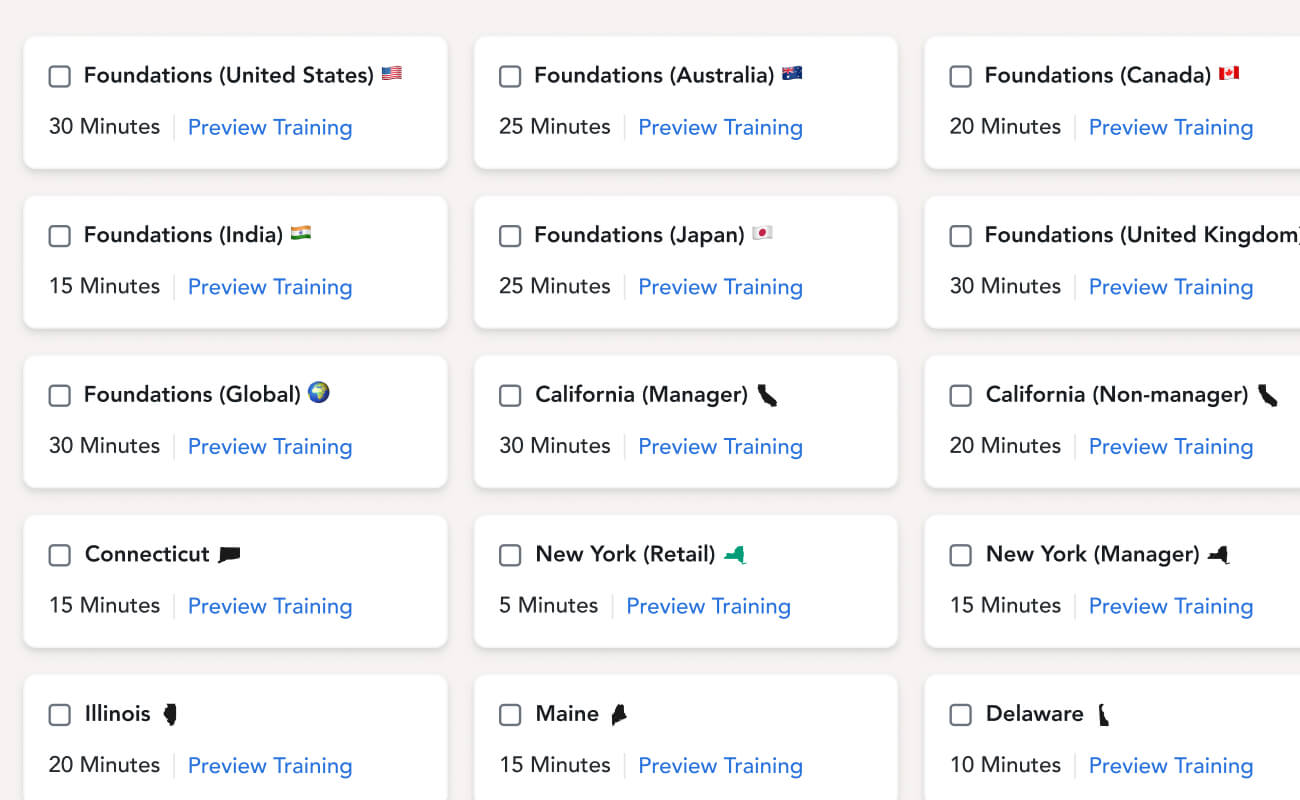
Localized content
200+ modular courses meet local, state, and country legal requirements, with fast and free translations available in dozens of languages.
See courses